In short
- Getting there: almost all visitors fly into Auckland (AKL), Christchurch (CHC), Queenstown (ZQN) or Wellington (WLG). Flights from Australia's east coast take about 3–4 hours; from the US West Coast about 12–13 hours; from Asian hubs 10–12 hours.
- Between the islands: fly, or take the Interislander or Bluebridge ferry from Wellington to Picton – about 3.5 hours across Cook Strait, with cars and campervans.
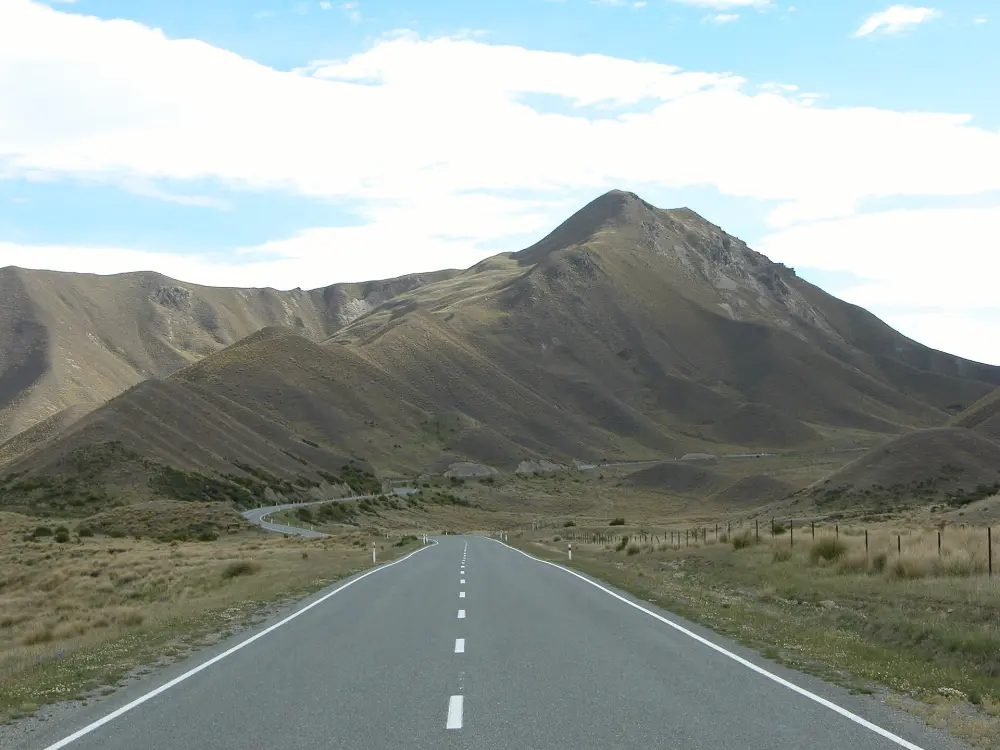
- Self-drive is the most flexible way to see New Zealand. Drive on the left; the open-road limit is usually 100 km/h; roads are narrow, winding and slower than maps suggest.
- Scenic trains: the Northern Explorer (Auckland–Wellington, three days a week each way), Coastal Pacific (Christchurch–Picton, daily 1 Sep–30 Apr) and TranzAlpine (Christchurch–Greymouth, daily) – as of November 2026.
- Coaches: InterCity links about 600 towns; good value but timetables are sparse in remote areas.
Getting to New Zealand
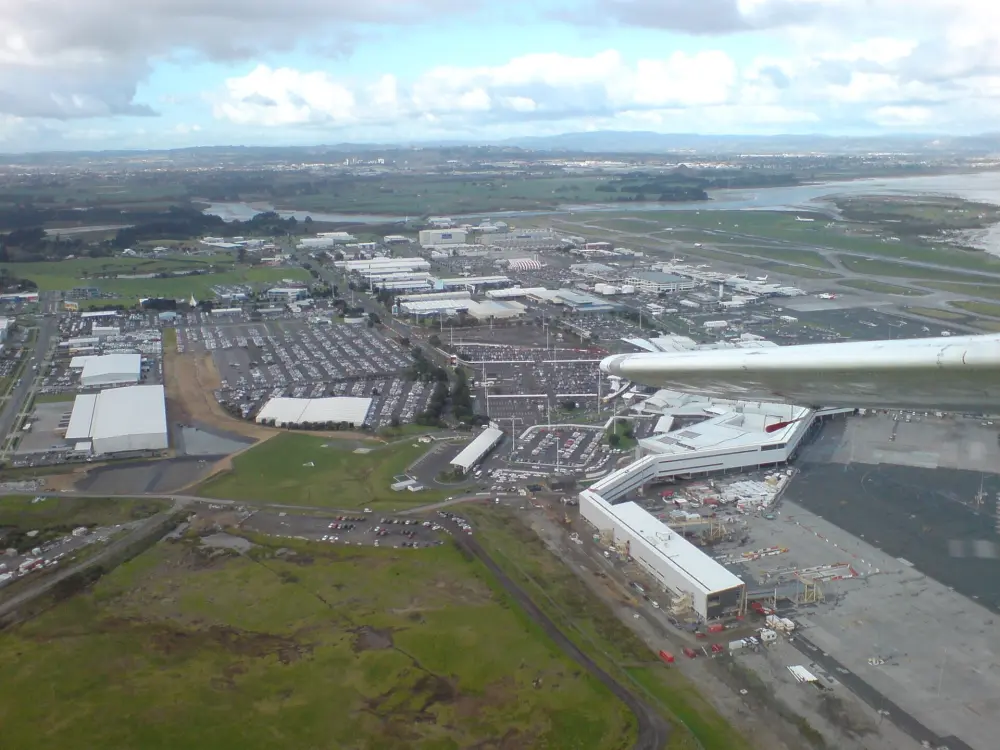
New Zealand has no land borders and only a handful of cruise arrivals, so nearly every visitor flies in. Auckland Airport (AKL) is the main gateway with non-stop flights from Australia, the Pacific, Asia and North and South America; Christchurch (CHC) is the South Island hub; Queenstown (ZQN) and Wellington (WLG) take mostly trans-Tasman flights. Air New Zealand, Qantas, Jetstar, Virgin Australia and many Asian, Middle Eastern and American carriers serve the country.
If your trip focuses on the South Island – Queenstown, Milford Sound, the glaciers, Aoraki/Mount Cook – an open-jaw ticket (arrive Auckland, leave from Christchurch or Queenstown, or vice versa) saves a day of backtracking. From Australia, direct flights to Queenstown are the fastest way to the Southern Alps.
Before you board, sort out your NZeTA or visa – airlines check it at check-in.
| From | Typical non-stop flight time to Auckland | Notes |
|---|---|---|
| Sydney / Melbourne / Brisbane | ≈ 3–4 h | Also direct to Christchurch, Wellington and Queenstown |
| Fiji / Rarotonga / Tonga / Samoa | ≈ 3–4 h | Several flights a week to daily |
| Singapore / Hong Kong / Shanghai / Tokyo | ≈ 10–11.5 h | Some routes seasonal |
| Los Angeles / San Francisco | ≈ 12.5–13 h | Overnight flights |
| Houston / New York (JFK) | ≈ 15–17.5 h | Among the world's longest routes |
| Dubai / Doha | ≈ 16–17 h | One-stop connections to Europe |
| London | ≈ 24 h + connection | No non-stop service; via Asia, the Gulf or the US |
From the airport to the city
- Auckland (AKL): the airport is about 21 km south of the city centre. The AirportLink bus connects the terminals with Puhinui station, from where electric trains run to the city; since the City Rail Link opened on 13 September 2026, trains run under the city centre to Te Waihorotiu, Karanga-a-Hape and Maungawhau stations as well as Waitematā (Britomart). Pay with an AT HOP card or contactless bank card. Shuttles, taxis and ride-hailing take 30–60 minutes depending on traffic – see getting to Auckland.
- Christchurch (CHC): about 12 km from the centre; Metro buses run to the Bus Interchange in about 30 minutes.
- Wellington (WLG): about 8 km from the centre; the Airport Express bus or a taxi takes 20–30 minutes.
- Queenstown (ZQN): 8 km from town; Orbus public buses run every 15–30 minutes and take about 20–30 minutes.
Domestic flights: the fastest way to cover distance
Air New Zealand flies to about 20 domestic airports; Jetstar competes on the main trunk routes (Auckland, Wellington, Christchurch, Queenstown, Dunedin); and regional airlines such as Sounds Air, Air Chathams and Originair fill gaps (Wellington–Nelson/Blenheim/Picton, Kāpiti and others). Typical flight times: Auckland–Christchurch about 1 h 20 min, Auckland–Queenstown about 1 h 50 min, Wellington–Christchurch about 50 minutes.
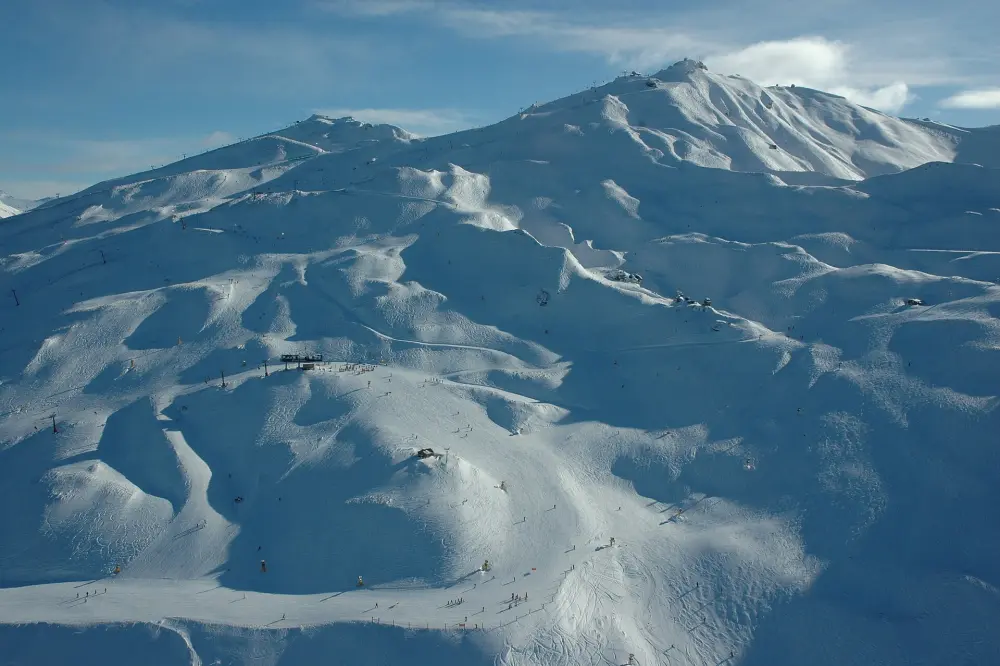
Flying makes sense if you have less than two weeks and want to see both islands: a common pattern is Auckland → (drive the North Island) → fly Wellington or Rotorua to Christchurch or Queenstown. Book early for the summer holidays (mid-December to January) and for ski season weekends in Queenstown.
Crossing Cook Strait: Interislander and Bluebridge ferries
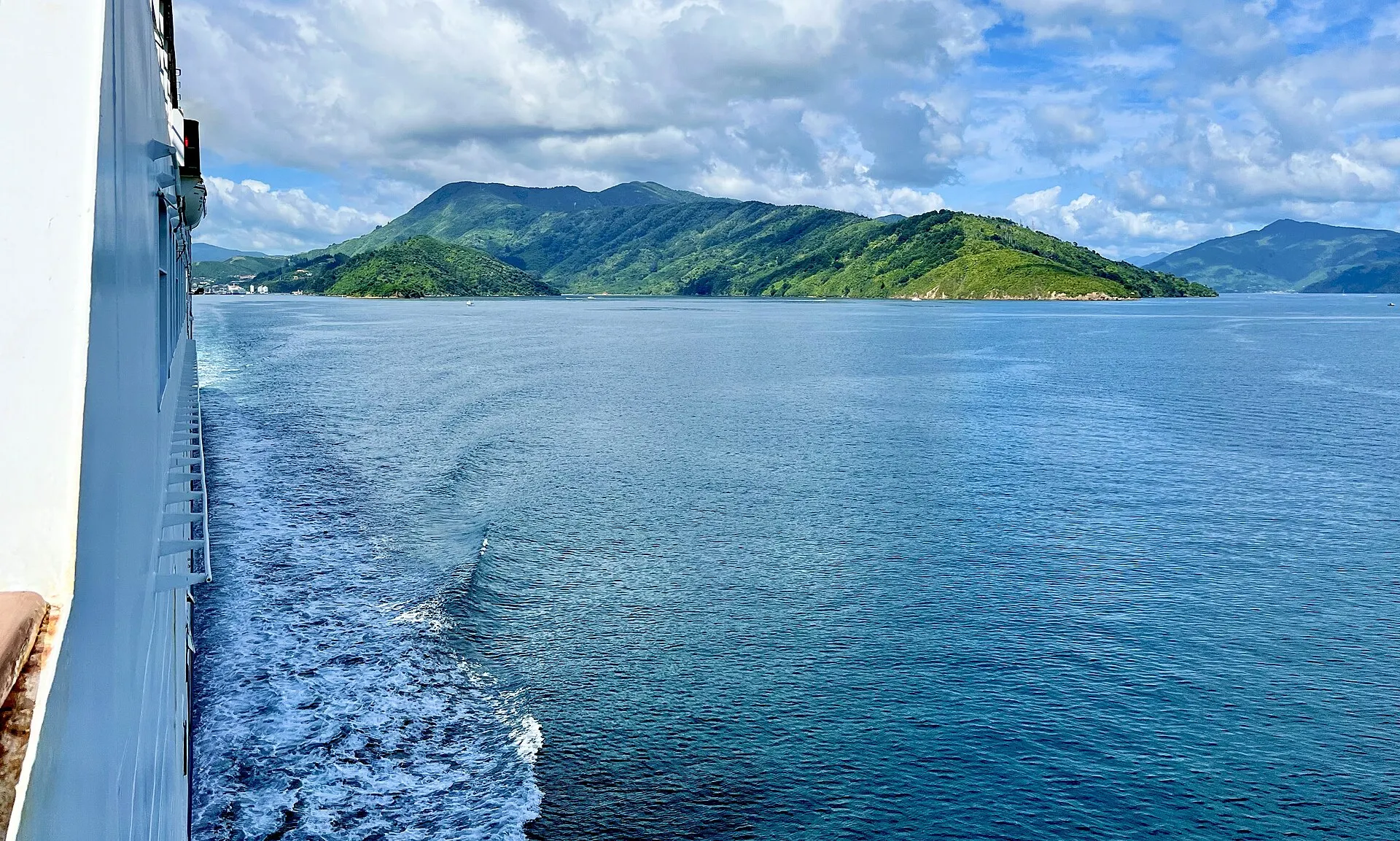
Two companies run roll-on, roll-off ferries between Wellington and Picton, carrying passengers, cars, campervans and motorbikes. The crossing takes about 3 hours 30 minutes; the last hour, through Tōtaranui / Queen Charlotte Sound in the Marlborough Sounds, is one of the most beautiful boat rides in the country. Cook Strait can be rough – sailings are occasionally cancelled in strong southerlies.
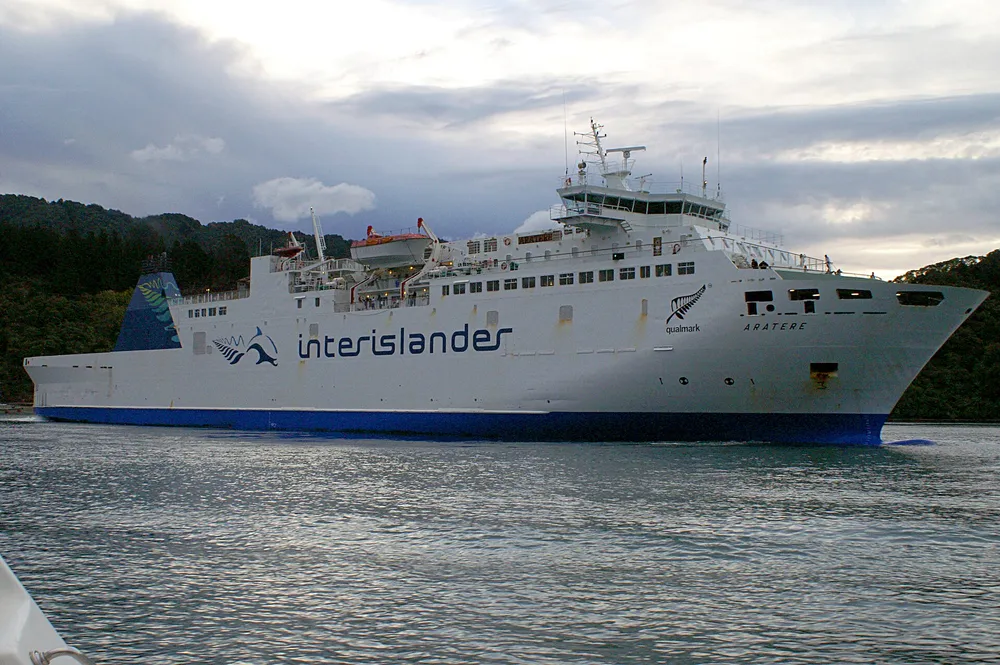
- Interislander (KiwiRail): terminal at Kaiwharawhara, north of Wellington's centre (shuttle bus from the railway station). Since the retirement of the Aratere in August 2025 the line runs two ships, Kaitaki and Kaiārahi, so there are fewer sailings than before; new, larger rail-enabled ferries are planned for 2029.
- Bluebridge (StraitNZ): terminal opposite Wellington railway station, walkable from the city; two ships, with cabins available on some sailings.
Rental cars: most rental companies do not allow their cars on the ferry. The usual practice is to drop the car at the Wellington terminal and pick up another in Picton (the companies arrange this for free or a small fee). Campervans usually do travel on the ferry – book the vehicle space early in summer.
Want to fly instead? Sounds Air links Wellington with Picton in about 25 minutes, and there are frequent Wellington–Christchurch, Wellington–Nelson and Wellington–Blenheim flights.
Wellington–Picton Interislander Ferry (one way)
Foot-passenger crossing of Cook Strait on the Interislander, ending with an hour through the sheltered Marlborough Sounds. Rated 4.7/5 from 145 reviews (as of November 2026).
Check availabilityBook via GetYourGuideTour listings are on GetYourGuide. Prices, times and cancellation terms are shown live on each listing and can change; NewZealandTravel.com may earn a commission at no extra cost to you.
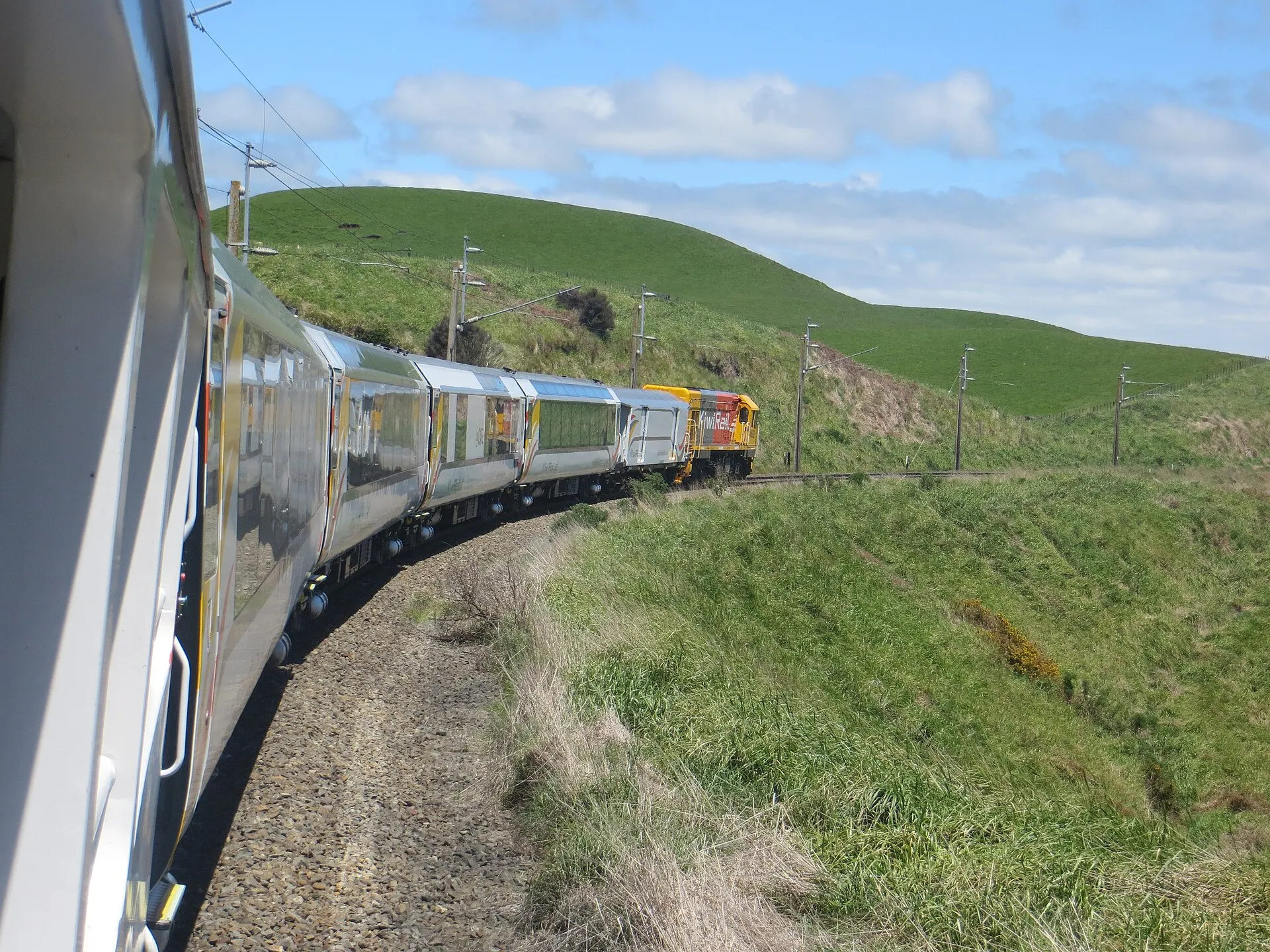
The scenic trains (Great Journeys New Zealand)
New Zealand's long-distance passenger trains are run by KiwiRail's Great Journeys New Zealand as scenic experiences rather than commuter services: big windows, open-air viewing carriages (on the South Island trains), a café car and audio commentary. Book ahead – standing is not allowed.
- Northern Explorer – Auckland to Wellington: about 680 km along the North Island Main Trunk via Hamilton, Ōtorohanga (for Waitomo), National Park (for Tongariro), Ohakune and the Kāpiti Coast. Southbound on Monday, Thursday and Saturday, northbound on Wednesday, Friday and Sunday; a full day's journey (around 11 hours). Highlights: the Raurimu Spiral and the high viaducts of the Central Plateau.
- Coastal Pacific – Christchurch to Picton: via Kaikōura, running right beside the sea. Daily from 1 September to 30 April (not on Christmas Day); northbound in the morning, southbound in the afternoon; about 6 hours end to end. Ideal for Kaikōura and the Cook Strait ferries.
- TranzAlpine – Christchurch to Greymouth: across the Canterbury Plains and over the Southern Alps via Arthur's Pass and the 8.5 km Otira Tunnel; about 5 hours each way, daily. Service note: until 30 November 2026 the train runs only between Christchurch and Arthur's Pass, with a bus connection to Greymouth, while track damage is repaired. In 2027 it does not run at Easter (26–29 March), 22–28 May, 25–28 September, Labour Weekend (23–26 October) or Christmas Day.
Times change seasonally: check the timetable on greatjourneysnz.com or call 0800 872 467 before you plan connections.
| Train | Route | Runs | Duration (approx.) |
|---|---|---|---|
| Northern Explorer | Auckland – Hamilton – National Park – Palmerston North – Wellington | Southbound Mon/Thu/Sat; northbound Wed/Fri/Sun | ≈ 11 h |
| Coastal Pacific | Christchurch – Kaikōura – Blenheim – Picton | Daily 1 Sep – 30 Apr (not 25 Dec) | ≈ 6 h |
| TranzAlpine | Christchurch – Arthur's Pass – Greymouth | Daily (bus beyond Arthur's Pass until 30 Nov 2026) | ≈ 5 h each way |
Long-distance buses: InterCity and others
InterCity is the national coach network, with routes from Kaitaia and Paihia in the north to Invercargill in the south and connections with the Cook Strait ferries. It is the cheapest way to travel between cities – especially with advance fares – and drivers often add commentary on scenic routes such as Queenstown–Milford Sound. The downside is frequency: some towns see one coach a day, and remote areas (the West Coast, the Catlins, East Cape) are thinly served.
Backpacker-oriented hop-on hop-off networks (Kiwi Experience, Stray) combine transport with a social itinerary. Within cities, use local buses: Auckland Transport (AT HOP or contactless), Metlink in Wellington, Metro in Christchurch, Orbus in Queenstown and Rotorua.
Rental cars and campervans
Hiring a car or campervan is how most visitors explore New Zealand: the best scenery is between the towns, and many trailheads, beaches and lookouts have no public transport. All major international brands operate at the main airports, along with local firms that can be cheaper but may have older fleets. Minimum hire age is usually 21 (some firms 18 or 25, with surcharges).
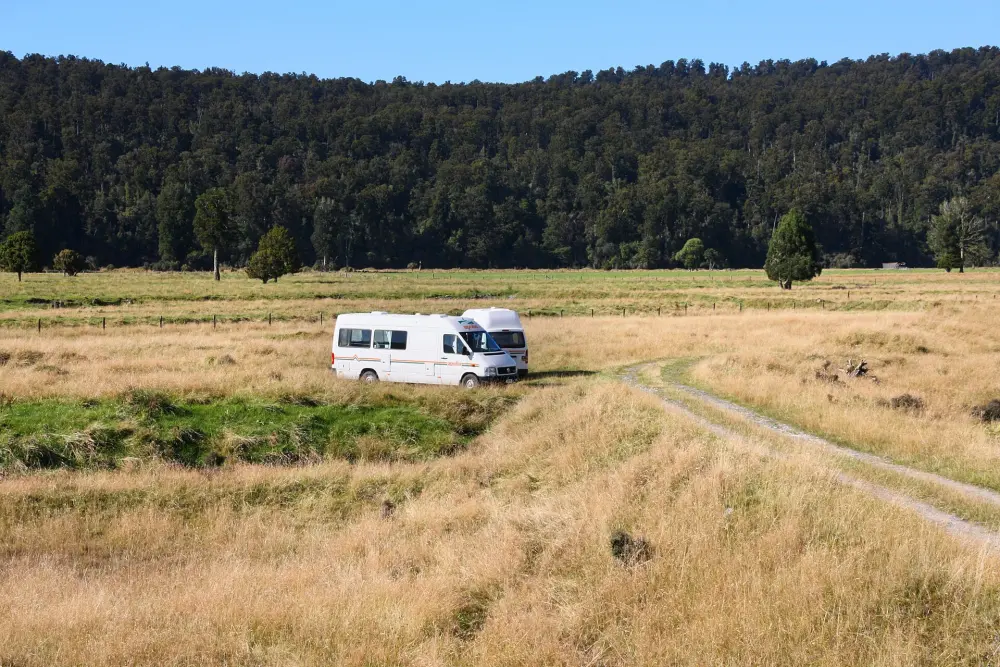
Campervans range from basic converted vans to six-berth motorhomes. If you want to camp outside paid campgrounds (freedom camping), the vehicle must be certified self-contained: since the 2023 law change, only vehicles with a fixed toilet and a green warrant card qualify, and local councils can still ban freedom camping in specific areas. DOC campsites and commercial holiday parks are the reliable alternatives.
Driving in New Zealand: rules and realities
- Keep left. At intersections, give way according to the NZ Road Code; at a roundabout, give way to traffic from your right.
- Speed limits: usually 100 km/h on open roads and 50 km/h in towns; some expressways are 110 km/h, and many rural and urban roads have lower posted limits – obey the signs. Speed cameras are common.
- Licence: you can drive for up to 12 months on a current overseas licence if it is in English, or with an approved translation or International Driving Permit.
- Alcohol: the limit for drivers aged 20+ is 250 µg per litre of breath (0.05 blood alcohol); for under-20s it is zero.
- Phones: hand-held phone use while driving is illegal.
- One-lane bridges are everywhere: a red arrow means give way to oncoming traffic.
- Overtaking: use the passing lanes; pull over safely to let faster traffic by – it is expected, especially in a slow campervan.
The biggest trap is time. Distances look short on the map, but the main highways are mostly two-lane roads with hills and curves. Plan on an average of 70–80 km/h, add stops, and avoid driving long distances after a long-haul flight. Check road conditions on the NZTA Journeys map before you go: slips, snow on alpine passes (Lewis Pass, Arthur's Pass, the Desert Road, Milford Road, Crown Range) and storm damage can close roads at short notice.
| Route | Distance | Driving time (no stops) |
|---|---|---|
| Auckland – Paihia (Bay of Islands) | ≈ 230 km | ≈ 3 h 30 min |
| Auckland – Hobbiton (Matamata) | ≈ 165 km | ≈ 2 h |
| Auckland – Waitomo | ≈ 195 km | ≈ 2 h 30 min |
| Auckland – Rotorua | ≈ 230 km | ≈ 3 h |
| Rotorua – Taupō | ≈ 80 km | ≈ 1 h |
| Taupō – Wellington | ≈ 375 km | ≈ 4 h 45 min |
| Taupō – Napier | ≈ 140 km | ≈ 1 h 45 min |
| Picton – Christchurch | ≈ 335 km | ≈ 4 h 15 min |
| Christchurch – Lake Tekapo | ≈ 225 km | ≈ 3 h |
| Lake Tekapo – Queenstown | ≈ 260 km | ≈ 3 h 15 min |
| Queenstown – Milford Sound | ≈ 290 km | ≈ 4 h |
| Queenstown – Franz Josef (via Haast Pass) | ≈ 350 km | ≈ 5 h |
Which transport for which trip?
| Most flexibleRental car | Campervan | Coach (InterCity) | Train + ferry | Domestic flights | |
|---|---|---|---|---|---|
| Flexibility | ●●●●● | ●●●●● | ●●○○○ | ●○○○○ | ●●○○○ |
| Scenery en route | ●●●●● | ●●●●● | ●●●●○ | ●●●●● | ●●●○○ |
| Speed over long distances | ●●●○○ | ●●○○○ | ●●○○○ | ●●○○○ | ●●●●● |
| Budget friendliness | ●●●○○ | ●●●○○ | ●●●●● | ●●○○○ | ●●●○○ |
| Effort / stresslower is better | ●●●○○ | ●●●●○ | ●○○○○ | ●○○○○ | ●○○○○ |
| Best for | Most visitors, couples, families | Summer road trips, nature lovers | Solo and budget travellers | Slow travel, special occasions | Short trips covering both islands |
-
Rental car
Most flexible- Flexibility
- ●●●●●
- Scenery en route
- ●●●●●
- Speed over long distances
- ●●●○○
- Budget friendliness
- ●●●○○
- Effort / stress
- ●●●○○
- Best for
- Most visitors, couples, families
-
Campervan
- Flexibility
- ●●●●●
- Scenery en route
- ●●●●●
- Speed over long distances
- ●●○○○
- Budget friendliness
- ●●●○○
- Effort / stress
- ●●●●○
- Best for
- Summer road trips, nature lovers
-
Coach (InterCity)
- Flexibility
- ●●○○○
- Scenery en route
- ●●●●○
- Speed over long distances
- ●●○○○
- Budget friendliness
- ●●●●●
- Effort / stress
- ●○○○○
- Best for
- Solo and budget travellers
-
Train + ferry
- Flexibility
- ●○○○○
- Scenery en route
- ●●●●●
- Speed over long distances
- ●●○○○
- Budget friendliness
- ●●○○○
- Effort / stress
- ●○○○○
- Best for
- Slow travel, special occasions
-
Domestic flights
- Flexibility
- ●●○○○
- Scenery en route
- ●●●○○
- Speed over long distances
- ●●●●●
- Budget friendliness
- ●●●○○
- Effort / stress
- ●○○○○
- Best for
- Short trips covering both islands
Our editorial judgement, as of November 2026
Getting around without a car
It is entirely possible to see New Zealand by public transport and tours: base yourself in hubs (Auckland, Rotorua, Wellington, Christchurch, Queenstown) and use day tours for places without regular buses, such as Hobbiton, Waitomo, Milford Sound or Aoraki/Mount Cook. Our tours page lists the best-rated day trips by region, and every destination guide has a 'Getting there' page – start with Auckland, Rotorua or Wellington.
Frequently asked questions
What is the best way to travel around New Zealand?
For most visitors, a rental car or campervan: the scenery is between the towns and public transport is sparse outside the cities. Combine it with one or two domestic flights if you are short on time.
How do you get from the North Island to the South Island?
Fly, or take the Interislander or Bluebridge car ferry from Wellington to Picton (about 3.5 hours). Most rental companies swap cars at the terminals rather than shipping them.
Is there a train from Auckland to Wellington?
Yes, the Northern Explorer runs three days a week in each direction (southbound Monday, Thursday and Saturday as of November 2026) and takes about 11 hours.
Which side of the road do they drive on in New Zealand?
The left. The steering wheel is on the right, and at roundabouts you give way to traffic coming from your right.
Is Uber available in New Zealand?
Uber and other ride-hailing apps operate in the main cities and some tourist towns, including Auckland, Wellington, Christchurch, Queenstown, Rotorua and Dunedin. Availability is limited in small towns.
Sources and official information
Facts were checked against these official sources in November 2026. Opening hours, prices and timetables change, so confirm before you go.
- greatjourneysnz.com
- greatjourneysnz.com
- interislander.co.nz
- bluebridge.co.nz
- intercity.co.nz
- nzta.govt.nz
- journeys.nzta.govt.nz
- at.govt.nz
- aucklandairport.co.nz
- newzealand.com
NewZealandTravel.com is an independent guide, not the official site of Tourism New Zealand, the New Zealand Government or any operator. Some links are affiliate links: tours go to GetYourGuide and hotels go to Booking.com, and we may earn a commission at no extra cost to you.