- Region
- Waikato
- How long
- Half day – 1 night
- Name
- Wai = water, tomo = shaft or sinkhole
- From Auckland
- ≈ 2 h 30 min drive (≈ 195 km)
- From Rotorua
- ≈ 2 h (≈ 150 km)
- Nearest train
- Ōtorohanga (Northern Explorer), 16 km
In short
- Waitomo Glowworm Cave: the classic 45-minute guided walk and silent boat ride under a ceiling of glowworms.
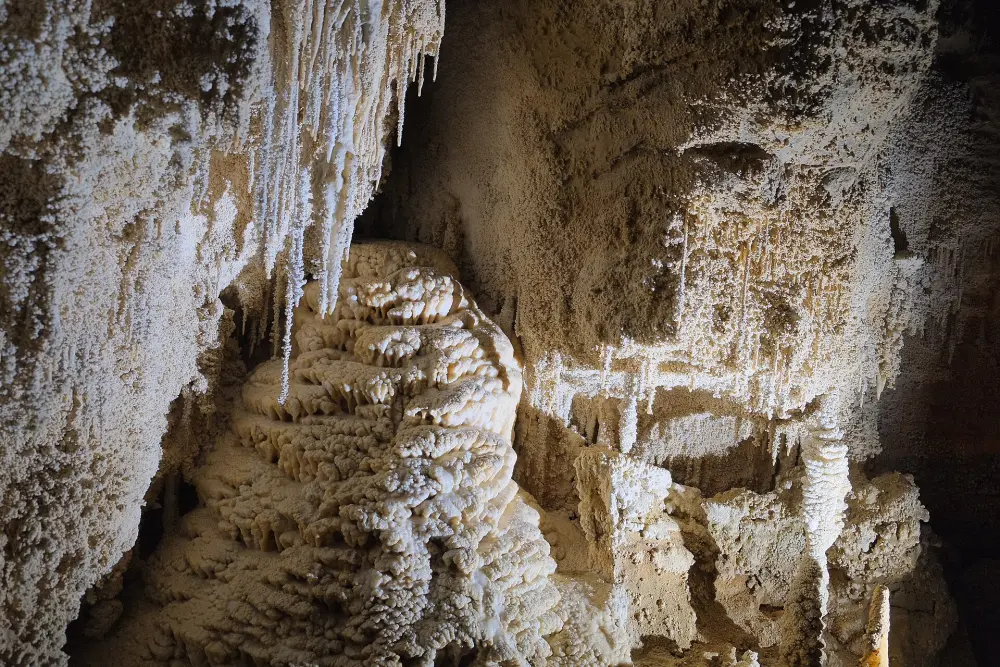
- Ruakuri Cave: longer (≈ 1.5–2 h), dramatic formations and glowworms, with a spiral entrance and wheelchair-accessible walkways.
- Adventure: black-water rafting on tubes, abseiling into the Lost World and cave climbing.
- Above ground: Mangapohue Natural Bridge, Marokopa Falls and the Ōtorohanga Kiwi House.
- Allow half a day, or stay a night to combine a dry and a wet cave.
Why visit Waitomo
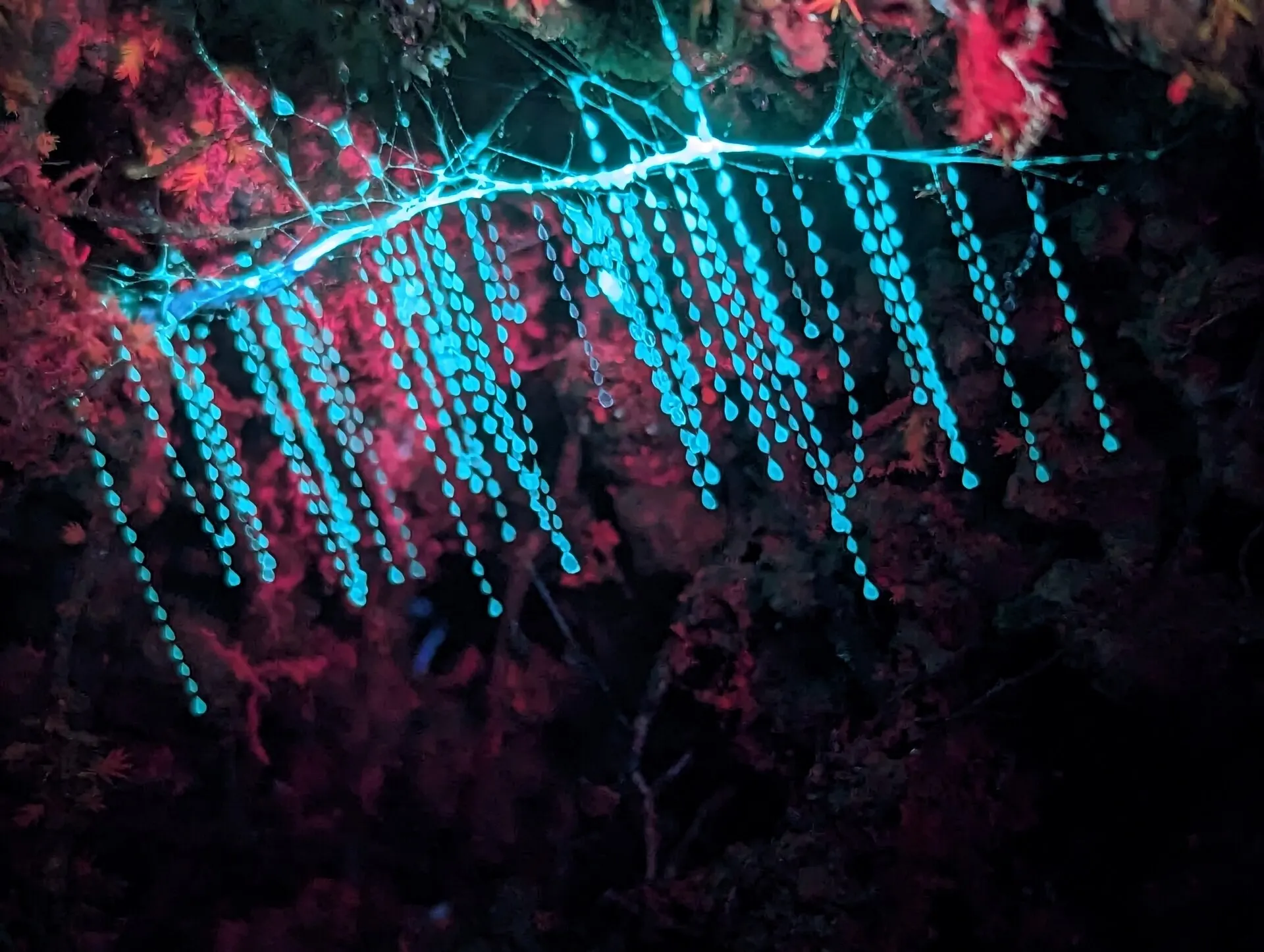
The hills around Waitomo are made of limestone laid down on the seabed about 30 million years ago and then lifted and dissolved by rain into a 'karst' landscape riddled with caves, sinkholes and underground rivers. Hundreds of caves are known. In several of them, the damp, dark, still air is perfect for the New Zealand glowworm, the larva of a fungus gnat, which dangles sticky silk threads from the ceiling and lures insects with a blue-green light.
The caves have long been known to local Māori. In 1887, Ngāti Uekaha chief Tāne Tinorau and English surveyor Fred Mace explored the Glowworm Cave on a flax raft, and tourism began soon after. In 1989 the land was returned to the descendants of the original owners, who now co-own the cave and work as guides – many guides are descendants of Tāne Tinorau.
Book tours in WaitomoLive times, prices and free cancellation terms on GetYourGuide.
Check availabilityWhich cave tour should I choose?
| ClassicGlowworm Cave | Ruakuri Cave | Black-water rafting | |
|---|---|---|---|
| Duration | ≈ 45 min | ≈ 1.5–2 h | ≈ 3 h incl. gear-up |
| Glowworms | ●●●●● | ●●●●○ | ●●●●○ |
| Cave formations | ●●●○○ | ●●●●● | ●●○○○ |
| Physical effortlower is better | ●○○○○ | ●●○○○ | ●●●●○ |
| Gets you wet | No | No | Yes – wetsuit provided |
| Best for | Everyone, short visits | Formations, fewer crowds | Adventure, fit travellers |
| Book the boat tour | Book Ruakuri | Book rafting |
-
Glowworm Cave
Classic- Duration
- ≈ 45 min
- Glowworms
- ●●●●●
- Cave formations
- ●●●○○
- Physical effort
- ●○○○○
- Gets you wet
- No
- Best for
- Everyone, short visits
-
Ruakuri Cave
- Duration
- ≈ 1.5–2 h
- Glowworms
- ●●●●○
- Cave formations
- ●●●●●
- Physical effort
- ●●○○○
- Gets you wet
- No
- Best for
- Formations, fewer crowds
-
Black-water rafting
- Duration
- ≈ 3 h incl. gear-up
- Glowworms
- ●●●●○
- Cave formations
- ●●○○○
- Physical effort
- ●●●●○
- Gets you wet
- Yes – wetsuit provided
- Best for
- Adventure, fit travellers
Our editorial summary, as of November 2026 – check operators for current durations and age limits
Top things to do
- Waitomo Glowworm Cave – limestone chambers, the 'Cathedral' and the boat ride through the Glowworm Grotto.
- Ruakuri Cave – the longest guided walking tour, through a spiral entrance into a cave of stalactites, underground rivers and glowworms.
- Aranui Cave – a dry cave famous for delicate formations, no glowworms.
- Black-water rafting – float on an inner tube through dark tunnels lit by glowworms.
- Ruakuri Bush Walk – a free walk through native forest and limestone arches; glowworms on the banks after dark.
- Mangapohue Natural Bridge and Marokopa Falls – short walks on the road west to the coast.
More: things to do in Waitomo.
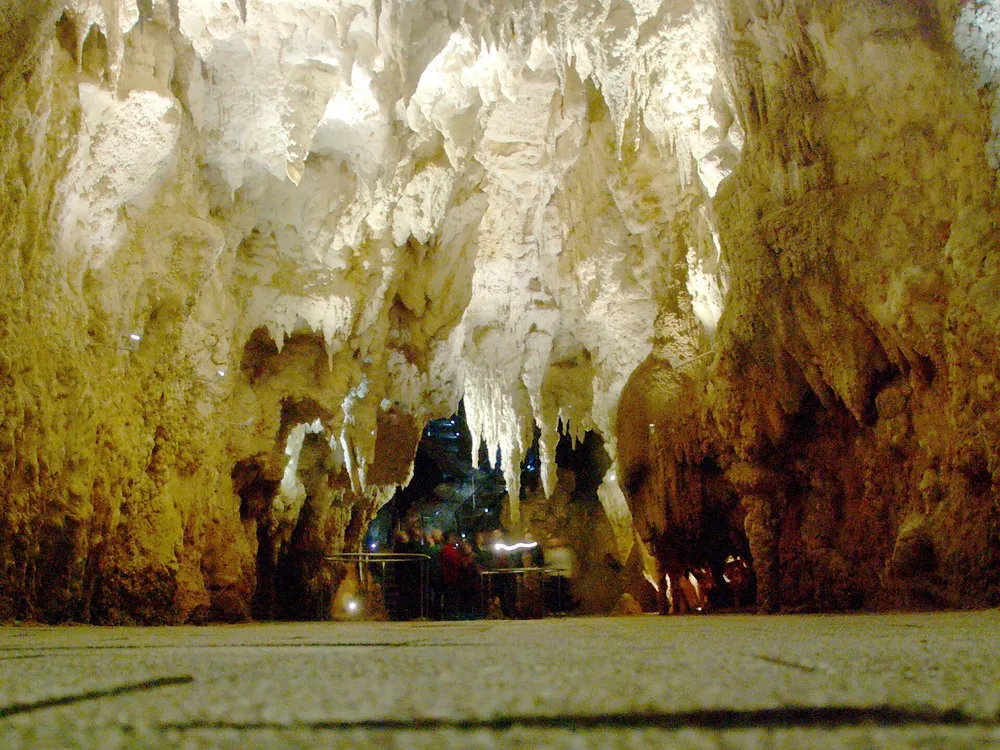
Waitomo Glowworm Caves Guided Tour by Boat
Guided walk and silent boat ride under the glowworms of the Waitomo Glowworm Cave. Rated 4.5 from 5,917 reviews on GetYourGuide (as of November 2026).
Check availabilityBook via GetYourGuide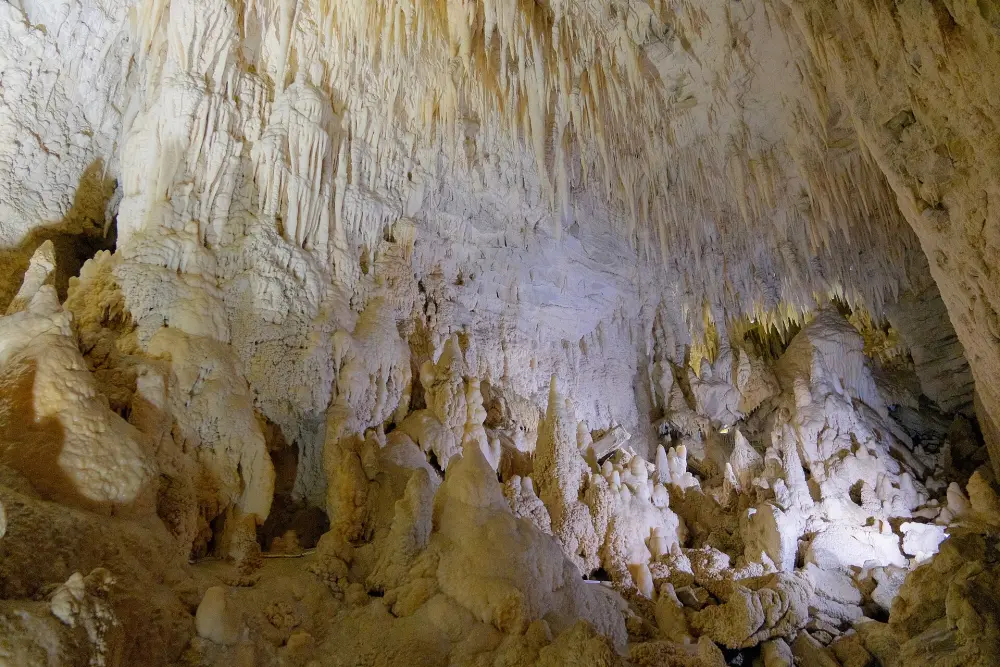
Ruakuri Glowworm Cave Guided Walking Tour
Guided walk through Ruakuri Cave's spiral entrance, underground waterfalls, formations and glowworms. Rated 4.7 from 1,422 reviews on GetYourGuide (as of November 2026).
Check availabilityBook via GetYourGuide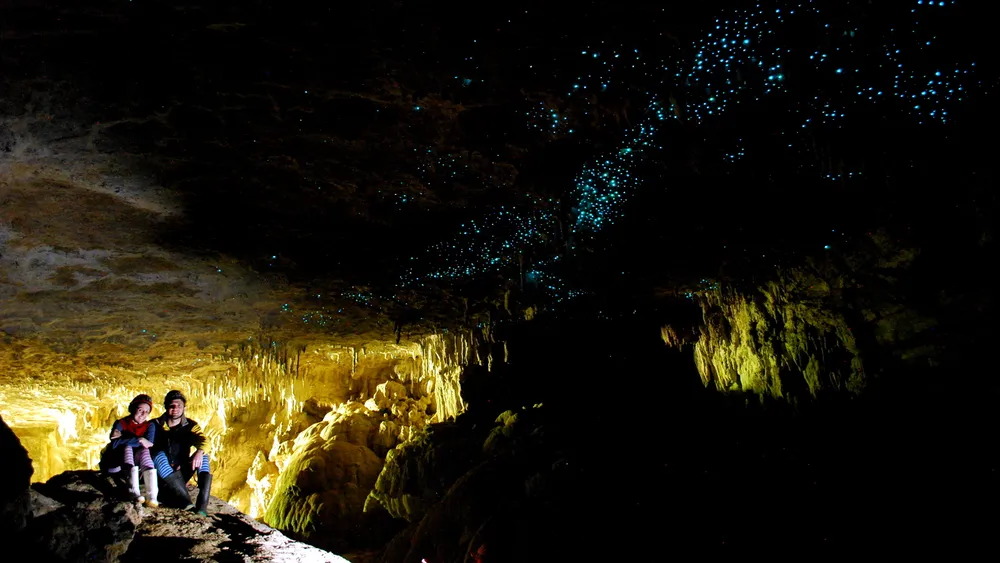
Labyrinth Black Water Rafting
Black-water rafting: float on an inner tube along an underground river lit by glowworms. Rated 4.9 from 1,870 reviews on GetYourGuide (as of November 2026).
Check availabilityBook via GetYourGuideTour listings are on GetYourGuide. Prices, times and cancellation terms are shown live on each listing and can change; NewZealandTravel.com may earn a commission at no extra cost to you.
Where to stay
Waitomo village is tiny, with farmstays, lodges and a backpackers; Ōtorohanga (15 minutes) and Te Kūiti have motels. Many visitors stay in Rotorua or Taupō and visit on the way. See where to stay.
Te Tiro Accommodation
WaitomoCottages on a hill farm above Waitomo, with glowworms nearby. 9.5 on Booking.com as of November 2026.
See on Booking.comAranui Farmstay
WaitomoFarmstay in the green hills a few minutes from the Waitomo caves. 9.6 on Booking.com as of November 2026.
See on Booking.comHotel links go to Booking.com, where you see live prices and availability. We do not list prices because they change daily; NewZealandTravel.com may earn a commission.
Getting there and when to go
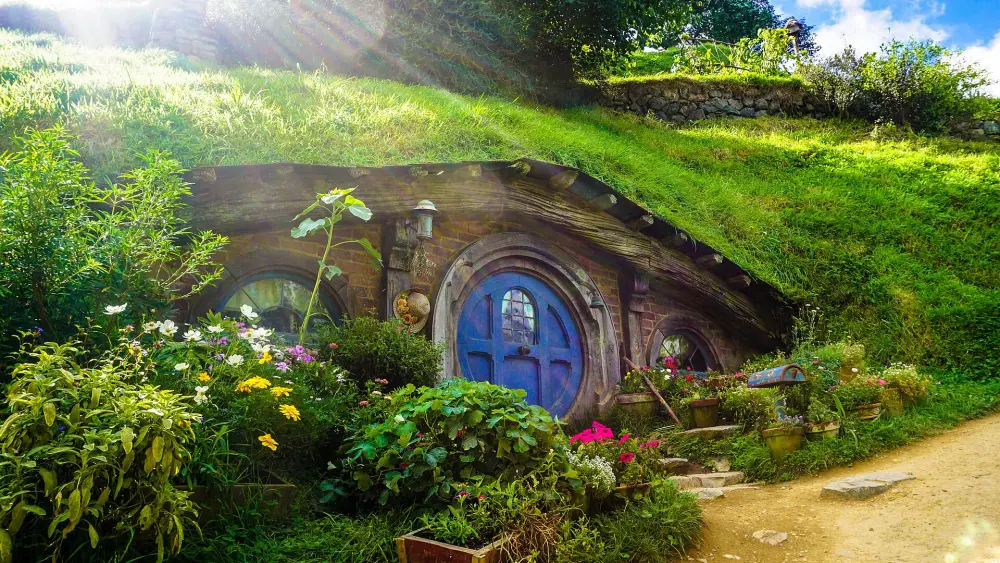
Waitomo is 2.5 hours from Auckland, 2 hours from Rotorua and 1 h 15 min from Hobbiton. Tours run year-round, rain or shine; the caves stay around 12–14 °C. Book ahead in summer and school holidays. See getting there and when to go.
Suggested half-day and full-day plans
- Half day: Waitomo Glowworm Cave boat tour + the free Ruakuri Bush Walk.
- Full day (dry): Glowworm Cave + Ruakuri Cave (combo ticket), lunch in the village, Mangapohue Natural Bridge and Marokopa Falls.
- Full day (wet): Labyrinth black-water rafting in the morning, Glowworm Cave in the afternoon, glowworm bush walk after dark.
How glowworms work
New Zealand's glowworm, Arachnocampa luminosa (titiwai in Māori, 'lights reflected in water'), is not a worm at all but the larva of a fungus gnat found only in New Zealand. Each larva lives in a mucus 'hammock' on a cave ceiling or a shaded bank and lowers dozens of sticky silk threads, like fishing lines. Its tail glows blue-green through a chemical reaction (bioluminescence), and insects flying towards the light are trapped on the threads and reeled in.
The larval stage lasts many months – the longest part of the life cycle. The larva then becomes a pupa for about a week or two, and the adult gnat, which has no mouth, lives only a few days to mate and lay eggs. Hungrier larvae glow brighter, and colonies glow best in still, humid places with a stream bringing insects – exactly the conditions of the Waitomo caves.
Glowworms are sensitive to light, noise and touch, which is why guides ask for silence, ban flash photography and keep tours moving. Never touch the threads.
Who runs the caves
The Waitomo Glowworm Cave has been a tourist attraction since 1889. In 1989 the land around it was returned to the descendants of Tāne Tinorau and his wife Huti, and the cave is now operated in partnership between the landowners and a tourism company; many of the guides are descendants of the original explorers. Several independent operators run other caves and adventure trips in the area, including black-water rafting, abseiling into deep shafts and small-group glowworm tours. This mix means you can choose anything from a 45-minute boat ride to a full day underground. See Waitomo tours for a comparison.
Beyond the caves: a scenic loop to the coast
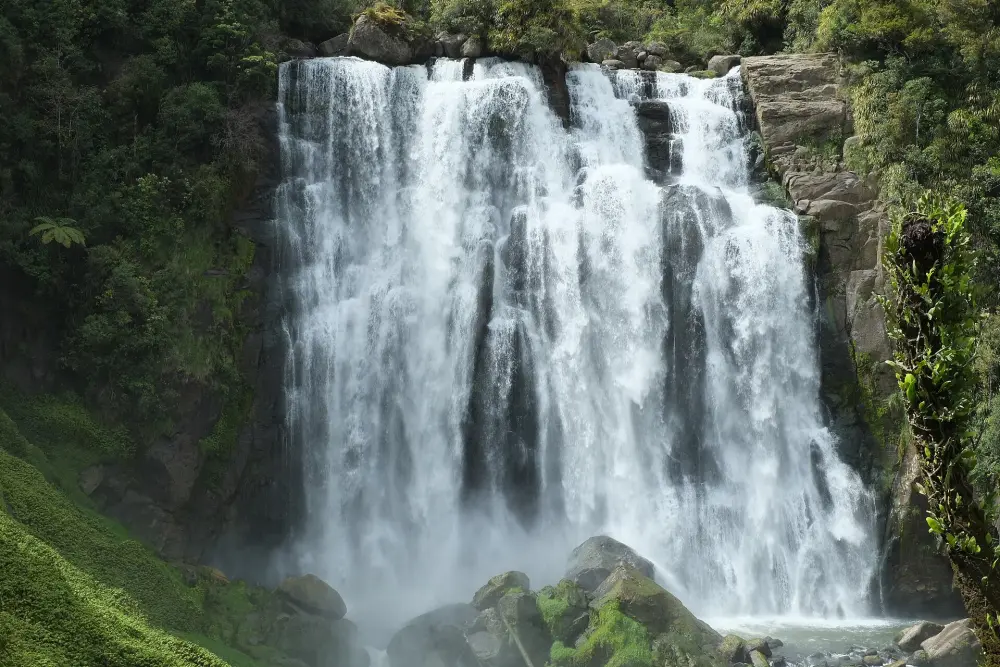
If you have half a day more, drive west along Te Anga Road towards the Tasman Sea – one of the most rewarding short road trips in the North Island. Stops include the Mangapohue Natural Bridge, a 17 m limestone arch reached on a 15-minute walk; the Piripiri Caves; and the Marokopa Falls, a broad 35 m waterfall a short bush walk from the road. The road ends at the remote black-sand coast of Marokopa. Allow about 45 minutes each way to the falls, plus walking time.
North-west, the harbour village of Kāwhia has a hot-water beach at low tide and is the resting place of the Tainui waka; Raglan, with its famous surf breaks, is about 1.5 hours away.
Good to know
The village has a café, a general store and a few restaurants with limited hours, especially in winter – book dinner if you stay overnight. Bring a light jacket for the caves (about 12–14 °C year-round) and closed shoes. Mobile coverage is patchy on the Te Anga Road towards Marokopa.
Plan your visit to Waitomo
- Things to doWaitomo's caves explained one by one, its adventure tours, free walks with glowworms at…
- ToursTickets for the Waitomo Glowworm Cave and Ruakuri, black-water rafting, and day trips…
- Getting thereDriving times to Waitomo, buses and the Northern Explorer train to Ōtorohanga, and day…
- Where to stayFarmstays, lodges and backpackers in and around Waitomo village – and when to stay in…
- When to goThe glowworms shine all year – here is how the seasons, school holidays and rain affect…
Frequently asked questions
Which Waitomo cave is best?
The Waitomo Glowworm Cave for the boat ride under the glowworms; Ruakuri for a longer walk with formations and glowworms. Do both with a combo ticket if you have time.
Can you take photos in the Waitomo Glowworm Cave?
No. Photography is not allowed in the Glowworm Cave to protect the glowworms and the experience. It is allowed in Ruakuri without flash.
Are glowworms worms?
No – they are the larvae of a fungus gnat, Arachnocampa luminosa. Their light comes from a chemical reaction in their tail.
How long should I spend in Waitomo?
Half a day is enough for one or two cave tours. A full day or an overnight stay lets you add black-water rafting or an abseil trip, the Ruakuri Bush Walk at night and the drive to Marokopa Falls.
Is Waitomo suitable for people who don't like enclosed spaces?
The Glowworm Cave and Ruakuri Cave have wide passages, paths and lighting, and most visitors with mild claustrophobia manage fine. Black-water rafting and adventure caving involve tight squeezes and dark water – choose those only if you are comfortable underground.
Can you take children to the Waitomo caves?
Yes – the Glowworm Cave boat tour and Ruakuri Cave walking tour suit all ages (some steps and dark sections). Adventure tours such as black-water rafting have minimum ages.
Sources and official information
Facts were checked against these official sources in November 2026. Opening hours, prices and timetables change, so confirm before you go.
NewZealandTravel.com is an independent guide, not the official site of Tourism New Zealand, the New Zealand Government or any operator. Some links are affiliate links: tours go to GetYourGuide and hotels go to Booking.com, and we may earn a commission at no extra cost to you.