- Region
- Canterbury (Mackenzie)
- How long
- 1–2 nights
- From Christchurch
- ≈ 3 h (225 km)
- To Mt Cook Village
- ≈ 1 h 15 min (105 km)
- Dark Sky Reserve
- Aoraki Mackenzie, since 2012 (≈ 4,367 km²)
- Altitude
- ≈ 700 m
In short
- Where: a small village in the Mackenzie Basin, ≈ 3 h from Christchurch and ≈ 1 h 15 min from Aoraki/Mount Cook Village.
- Famous for: the milky-turquoise lake, the 1935 Church of the Good Shepherd, stargazing in the Aoraki Mackenzie International Dark Sky Reserve, and lupins in November–December.
- Do: a guided stargazing tour, the Mt John summit walk, Tekapo Springs hot pools, a scenic flight over Aoraki and the glaciers.
- How long: 1–2 nights – you need at least one clear night for the stars.
- Māori name: Takapō.
Why Tekapo is special
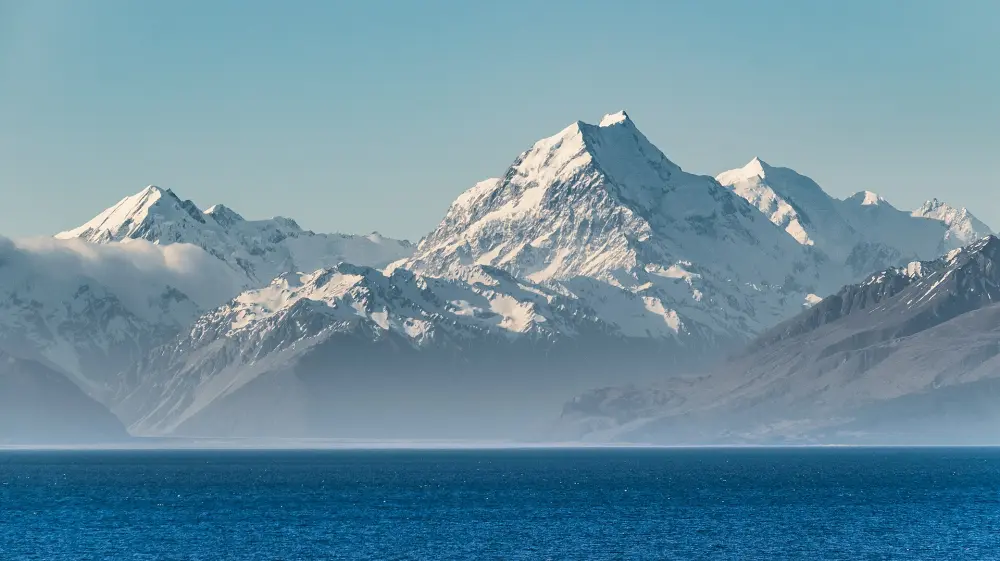
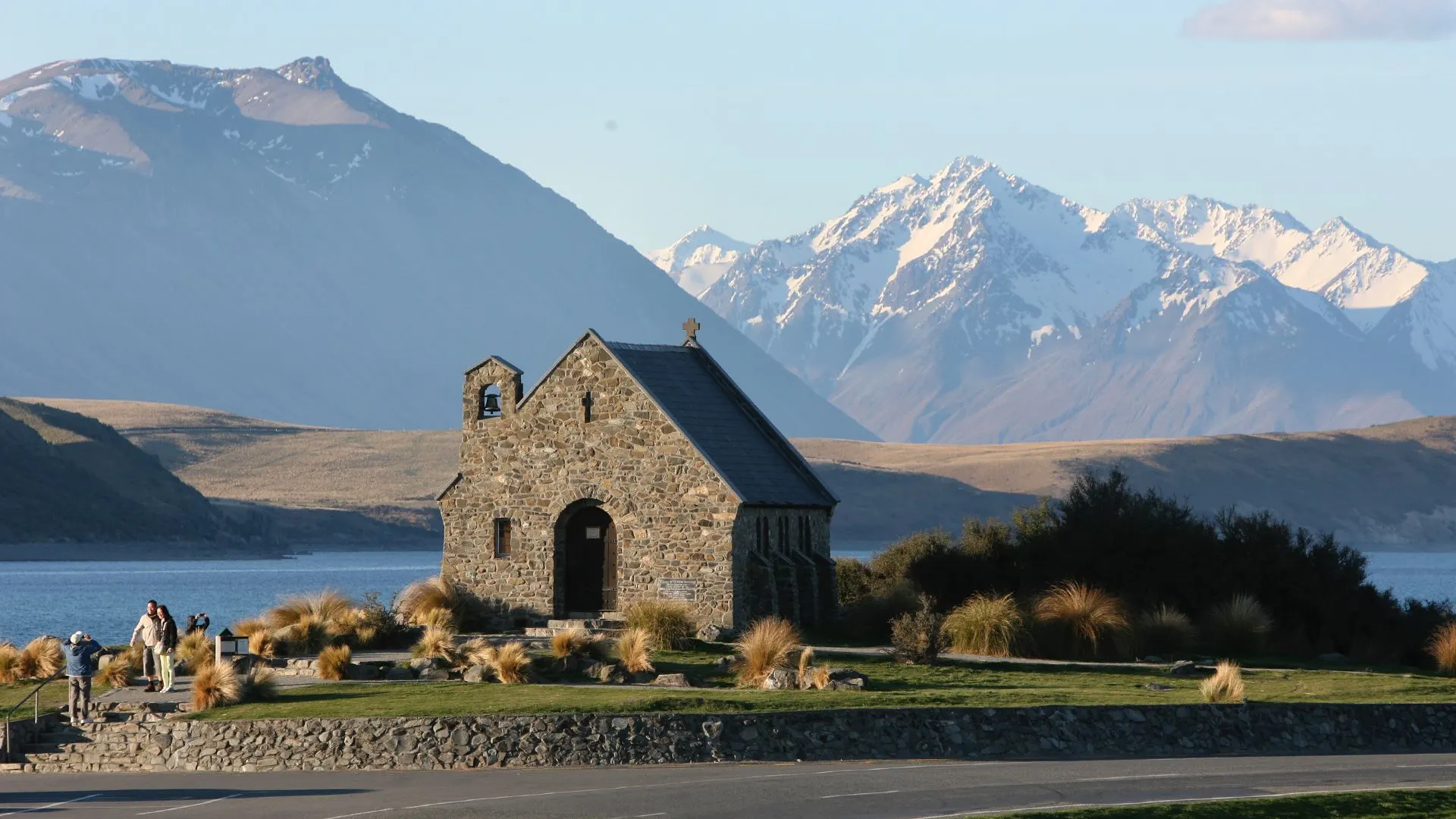
Few views in New Zealand are as instantly recognisable as Lake Tekapo: a sheet of improbably blue water, golden tussock hills and the snowy Southern Alps beyond. The colour comes from rock flour – fine particles ground by glaciers at the head of the lake and suspended in the meltwater, which scatter sunlight into that milky turquoise.
On the shore stands the little stone Church of the Good Shepherd, built in 1935 as a memorial to the pioneers of the Mackenzie Country, with an altar window that frames the lake and mountains. Nearby, a bronze sheepdog statue honours the collies without which high-country farming would have been impossible.
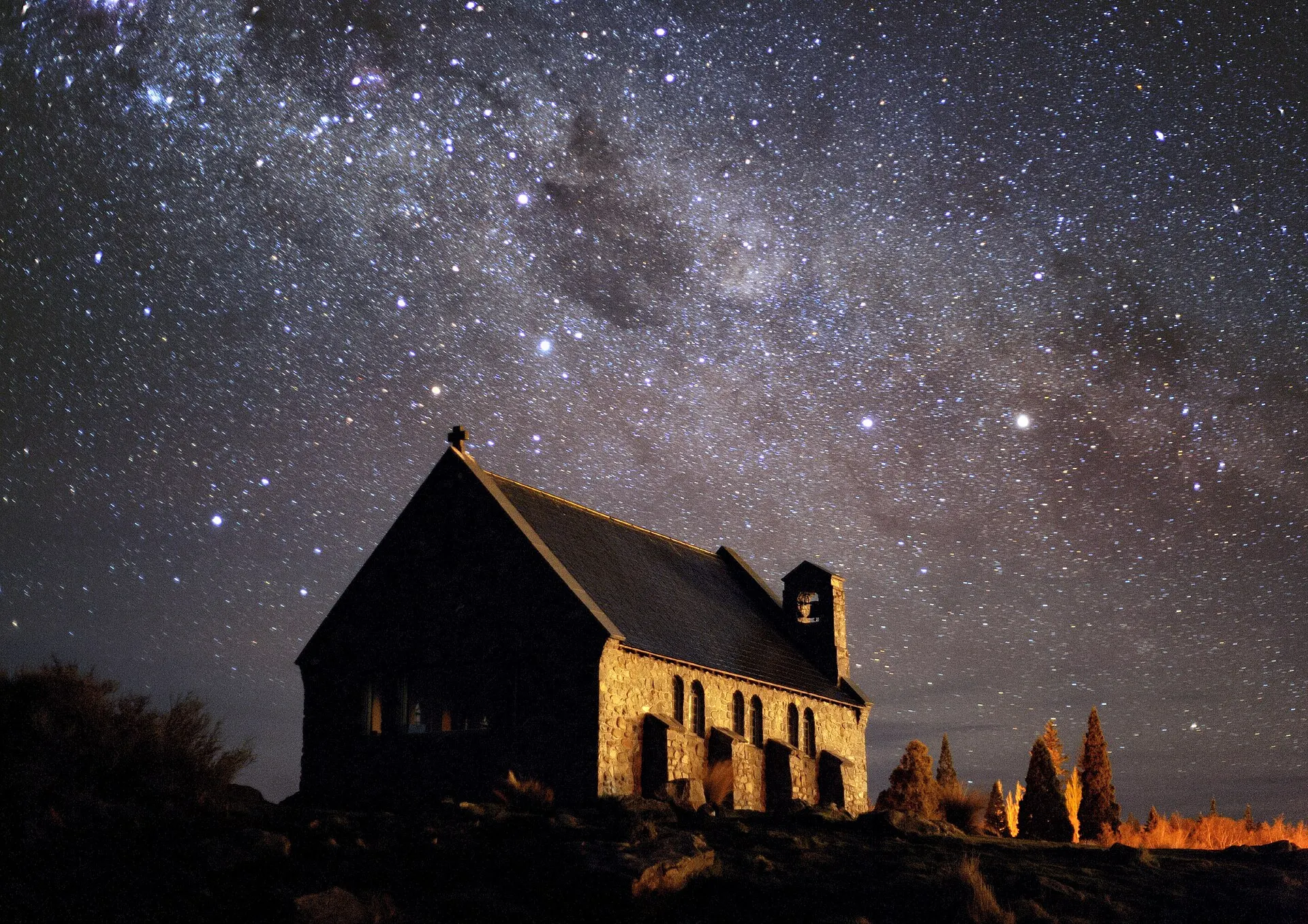
And then there is the night. Tekapo sits at the heart of the Aoraki Mackenzie International Dark Sky Reserve, designated in 2012 and covering about 4,367 km² of the Mackenzie Basin and Aoraki/Mount Cook National Park. On a clear moonless night the Milky Way casts shadows, and the Magellanic Clouds hang overhead.
Book tours in Lake TekapoLive times, prices and free cancellation terms on GetYourGuide.
Check availabilityWhy is Lake Tekapo so good for stargazing?
Several things come together here:
- Light controls – the Mackenzie District has regulated outdoor lighting since the early 1980s to protect the University of Canterbury’s Mt John Observatory, so street lights are shielded and pointed down.
- Clear, dry air – the basin sits in the rain shadow of the Southern Alps and gets many clear nights, especially in winter.
- Altitude and isolation – the village sits around 700 m above sea level, far from big cities.
- The southern sky – the galactic centre of the Milky Way passes high overhead in the southern winter, along with the Southern Cross, the Magellanic Clouds and, occasionally, the aurora australis.
- Recognition – the dark sky reserve was one of the first “gold tier” reserves recognised by DarkSky International (then the International Dark-Sky Association).
Guided tours make the most of it with large telescopes and astronomers who explain what you are seeing – including Māori star lore such as Matariki and Te Waka o Tamarereti. See Tekapo stargazing tours.
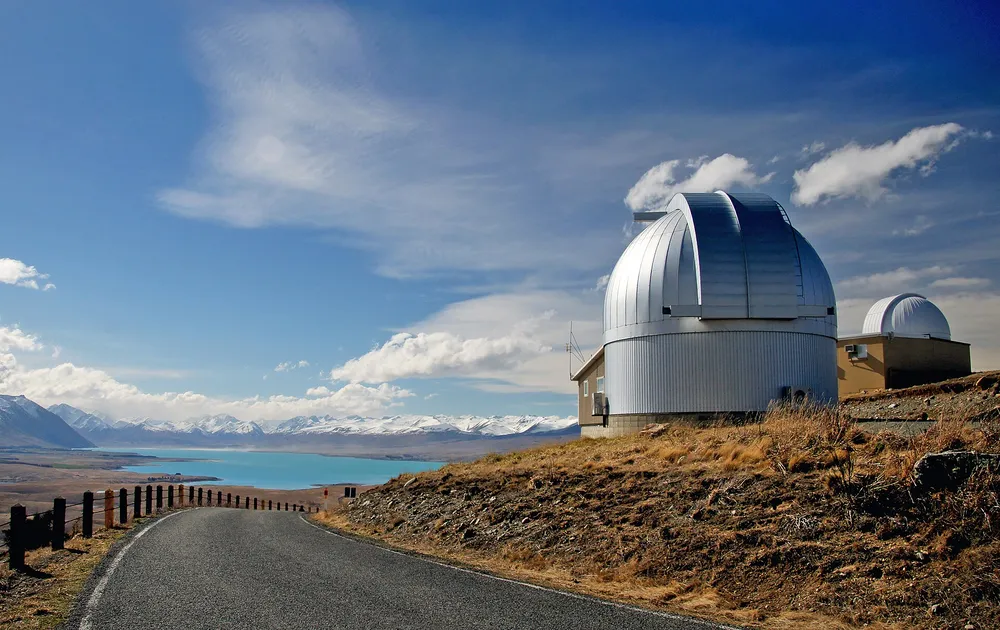
Lake Tekapo: Mount John Summit Stargazing
Night tour to the summit of Mt John and its University of Canterbury observatory, with guides and large telescopes in the Dark Sky Reserve. Rated 4.6/5 from 347 reviews on GetYourGuide (as of November 2026).
Check availabilityBook via GetYourGuide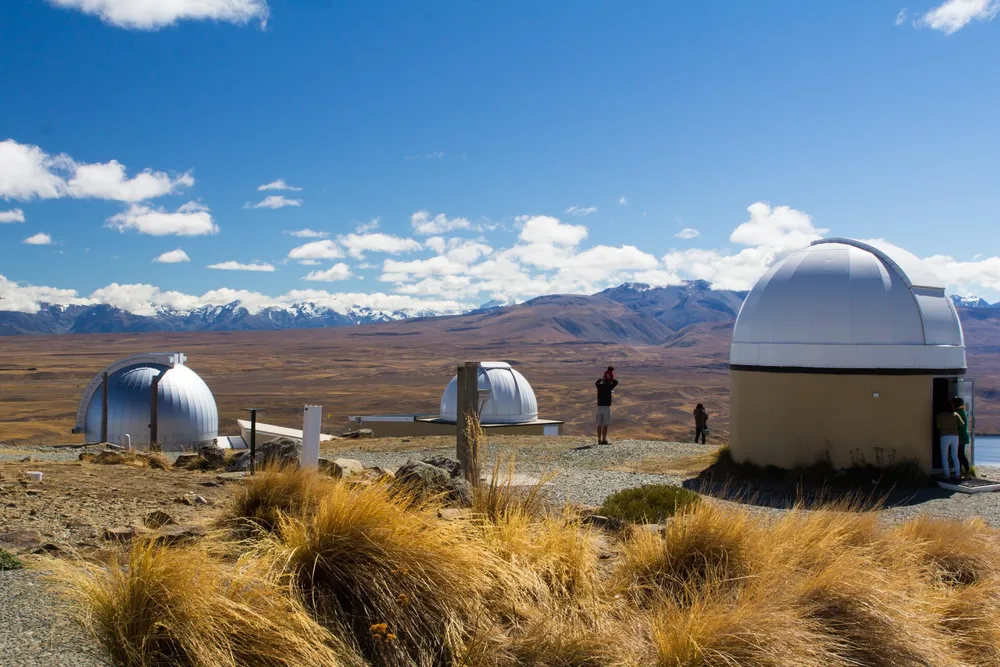
Lake Tekapo: Stargazing Experience
Guided stargazing near the village with telescopes and an introduction to the southern sky. Rated 4.9/5 from 788 reviews (as of November 2026).
Check availabilityBook via GetYourGuide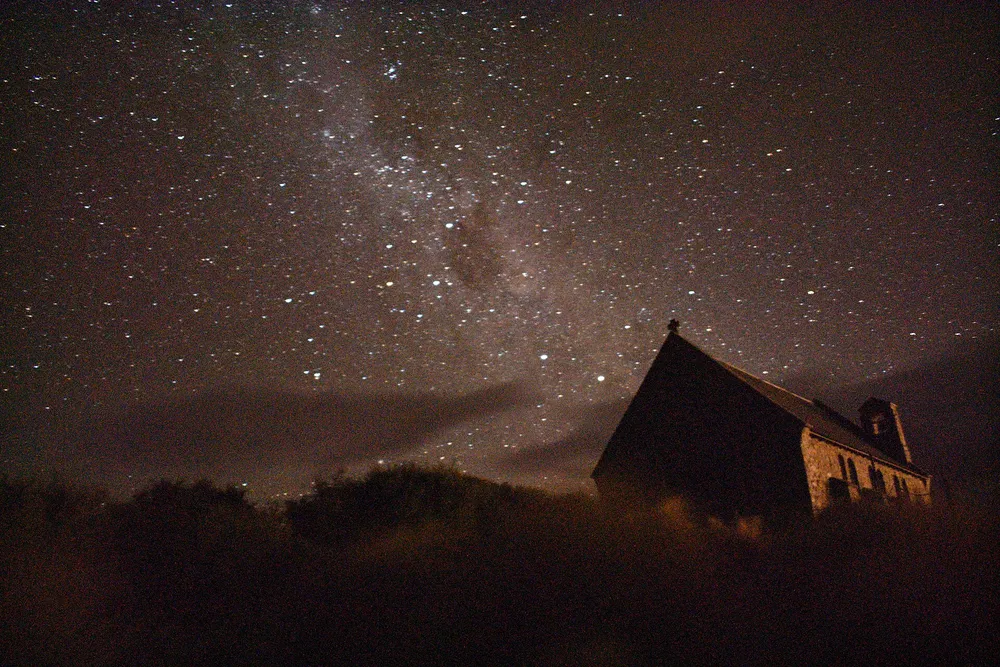
Lake Tekapo: Alpine Stargazing Experience with a Guide
Guided stargazing at a dark alpine site with warm gear and telescopes. Rated 4.6/5 from 864 reviews (as of November 2026).
Check availabilityBook via GetYourGuideTour listings are on GetYourGuide. Prices, times and cancellation terms are shown live on each listing and can change; NewZealandTravel.com may earn a commission at no extra cost to you.
Lake Tekapo at dawn
If you only set one alarm in New Zealand, make it here. At sunrise the lake is often glassy, the peaks at the head of the valley catch the first pink light, and the Good Shepherd church stands in silhouette before the tour buses arrive. Sunrise is around 6 AM local time in midsummer and after 8 AM in midwinter; arrive 30 minutes earlier for the blue hour.
Good dawn spots: the lakeshore below the church, the footbridge over the Tekapo River, and the Mt John summit road (open from morning; check gate times) for a view over both Lake Tekapo and Lake Alexandrina. Winter dawns are bitterly cold – bring gloves.
Top things to do
- Stargazing tour – summit tours at Mt John Observatory, crater stargazing at Cowan’s Observatory or a guided session in the hills.
- Mt John summit walk – a 1.5–2 hour return walk through larch forest to the summit café and observatory, with 360° views.
- Tekapo Springs – hot pools with lake views; ice skating and snow tubing in winter.
- Scenic flights over Aoraki/Mount Cook, the Tasman Glacier and the Main Divide.
- Lupins – the purple and pink flowers bloom along roadsides and riverbanks in November–December (they are an invasive weed in braided rivers – admire, don’t spread the seeds).
- Lake Pukaki and the salmon farms – 45 minutes away, the blue lake views Aoraki head-on; buy fresh salmon from the shop on the Tekapo–Pukaki canals.
Full details on things to do in Tekapo.
A day and a night in Tekapo
- Morning: Lake Tekapo at dawn by the Church of the Good Shepherd, then breakfast in the village.
- Mid-morning: walk the Mt John Summit Track (or drive the toll road) for coffee with a 360° view.
- Lunch: picnic on the lakefront or salmon from the canal farms on the way to Pukaki.
- Afternoon: scenic flight over Aoraki/Mount Cook and the glaciers, or Lake Alexandrina and a soak at Tekapo Springs.
- Evening: early dinner, then a guided stargazing tour (dress very warmly).
- Next day: continue to Aoraki/Mount Cook Village (1 h 15 min) for the Hooker Valley Track.
History of the Mackenzie Country
Takapō was part of seasonal travel routes of Ngāi Tahu, who hunted birds and gathered food in the basin. European pastoralists followed in the 1850s; the basin’s name comes from James Mackenzie, a Scottish drover caught in 1855 with a flock of stolen sheep – legend says his dog did most of the work. Large high-country stations followed, and in the 20th century the lakes were harnessed for hydroelectric power, with canals linking Tekapo, Pukaki and Ōhau. The village of Lake Tekapo itself grew from hydro construction and tourism.
How long to stay and where
One night is the minimum to see the stars; two nights double your chance of a clear sky. The village is small – everything is within a few minutes’ walk – and accommodation ranges from lakeview suites to motels and holiday parks. Book early for December–April and winter weekends. See where to stay in Tekapo.
The Mackenzie Suites
Lake TekapoSuites with lake and mountain views above the village – 9.5 on Booking.com as of November 2026.
See on Booking.comLakeview Tekapo
Lake TekapoModern apartments with lake views – 9.5 on Booking.com as of November 2026.
See on Booking.comThe Godley Hotel
Lake TekapoLarge, long-established hotel on the lakefront in the village centre – 7.8 on Booking.com as of November 2026.
See on Booking.comHotel links go to Booking.com, where you see live prices and availability. We do not list prices because they change daily; NewZealandTravel.com may earn a commission.
Tekapo on a South Island route
Tekapo lies on State Highway 8, the inland route between Christchurch and Queenstown. Most travellers combine it with Aoraki/Mount Cook National Park (≈ 1 h 15 min) before continuing over the Lindis Pass to Wānaka or Queenstown (≈ 3–3.5 h). From Christchurch allow about 3 hours.
Respecting the lake and the dark sky
Tekapo's beauty is fragile. The lupins that make the famous early-summer photos are an invasive weed that spreads along riverbeds and threatens the habitat of rare braided-river birds such as the kakī (black stilt) – admire them, but do not spread seeds. Around the Church of the Good Shepherd, stay on paths, keep quiet when services are held and avoid drones, which are restricted. At night, help protect the dark sky: use red torches, avoid shining lights across the lakefront and switch off unnecessary outdoor lights at your accommodation. And remember that the lake, fed by glaciers, is cold – even in summer, swim only briefly.
Plan your visit to Lake Tekapo
- Things to doStargazing tours, the Church of the Good Shepherd, Mt John summit walk, Tekapo Springs,…
- ToursBook Lake Tekapo stargazing tours – Mt John summit, Cowan’s Observatory crater, guided…
- Getting thereTekapo is about 3 hours from Christchurch and 3–3.5 hours from Queenstown on SH8.…
- Where to stayLakeview suites on the terraces above the village, central hotels and motels, and value…
- When to goLupins bloom mid-November to December, winter has the longest, clearest nights, and…
Frequently asked questions
Why is Lake Tekapo so blue?
Because of rock flour – very fine particles ground by glaciers and carried into the lake in meltwater. They stay suspended and scatter sunlight, giving the milky turquoise colour.
Why is Lake Tekapo good for stargazing?
Strict lighting rules, many clear dry nights in the rain shadow of the Alps, altitude and isolation. It lies in the Aoraki Mackenzie International Dark Sky Reserve, designated in 2012.
When do the lupins bloom at Tekapo?
Usually from mid-November to late December, depending on the season.
Can you go inside the Church of the Good Shepherd?
Yes, during its (limited) opening hours, but photography inside is not allowed and services take priority.
How many nights should I stay in Tekapo?
At least one for stargazing; two give a weather back-up and time for Mt John and the hot pools.
Is the Church of the Good Shepherd free to visit?
The grounds are free; the church itself is a working place of worship with limited opening hours and services – respect any closures, and note that photography inside has been restricted.
Sources and official information
Facts were checked against these official sources in November 2026. Opening hours, prices and timetables change, so confirm before you go.
- darksky.org
- darkskyproject.co.nz
- mackenzienz.com
- doc.govt.nz
- tekaposprings.co.nz
- canterbury.ac.nz
- teara.govt.nz
NewZealandTravel.com is an independent guide, not the official site of Tourism New Zealand, the New Zealand Government or any operator. Some links are affiliate links: tours go to GetYourGuide and hotels go to Booking.com, and we may earn a commission at no extra cost to you.