In short
- Aotearoa is the most widely used Māori name for New Zealand, often translated as 'land of the long white cloud'. Both names are official in everyday use: you will hear 'Aotearoa New Zealand' on the news and in government.
- Two main islands – the North Island (Te Ika-a-Māui) and the South Island (Te Waipounamu) – plus Stewart Island/Rakiura and about 600 smaller islands, covering about 268,000 km², roughly the size of the UK or Japan.
- About 5.3 million people (Stats NZ estimate, 2025); about a third live in Auckland. Around 17–18% identify as Māori.
- Three official languages: English, te reo Māori and New Zealand Sign Language.
- Known for: fiords, glaciers, volcanoes, geothermal wonders, Māori culture, adventure sports, wine, rugby – and the Lord of the Rings films.
What does Aotearoa mean?
Aotearoa is commonly translated as 'the land of the long white cloud' (ao = cloud or dawn, tea = white, roa = long). According to one tradition, the navigator Kupe's wife Kuramārōtini called out 'He ao! He ao!' ('A cloud! A cloud!') when she saw the land on the horizon. Originally the name may have referred only to the North Island; today it is used for the whole country, and 'Aotearoa New Zealand' appears on passports, banknotes and government documents.
The European name comes from the Dutch: after Abel Tasman's 1642 voyage, cartographers labelled the coast Nova Zeelandia, after the Dutch province of Zeeland ('sea land'). James Cook anglicised it as New Zealand. In 2013 the official Māori names of the two main islands were recognised alongside the English ones: Te Ika-a-Māui ('the fish of Māui', the North Island, pulled from the sea by the demigod Māui) and Te Waipounamu ('the waters of greenstone', the South Island). Read more in our history of New Zealand.
Land: islands of fire and ice
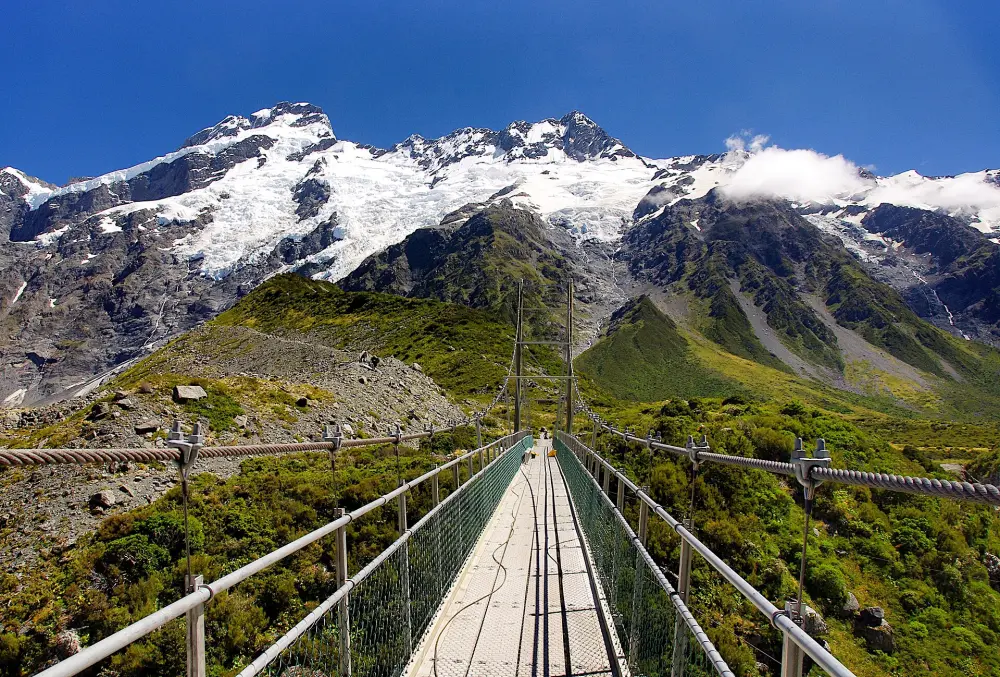
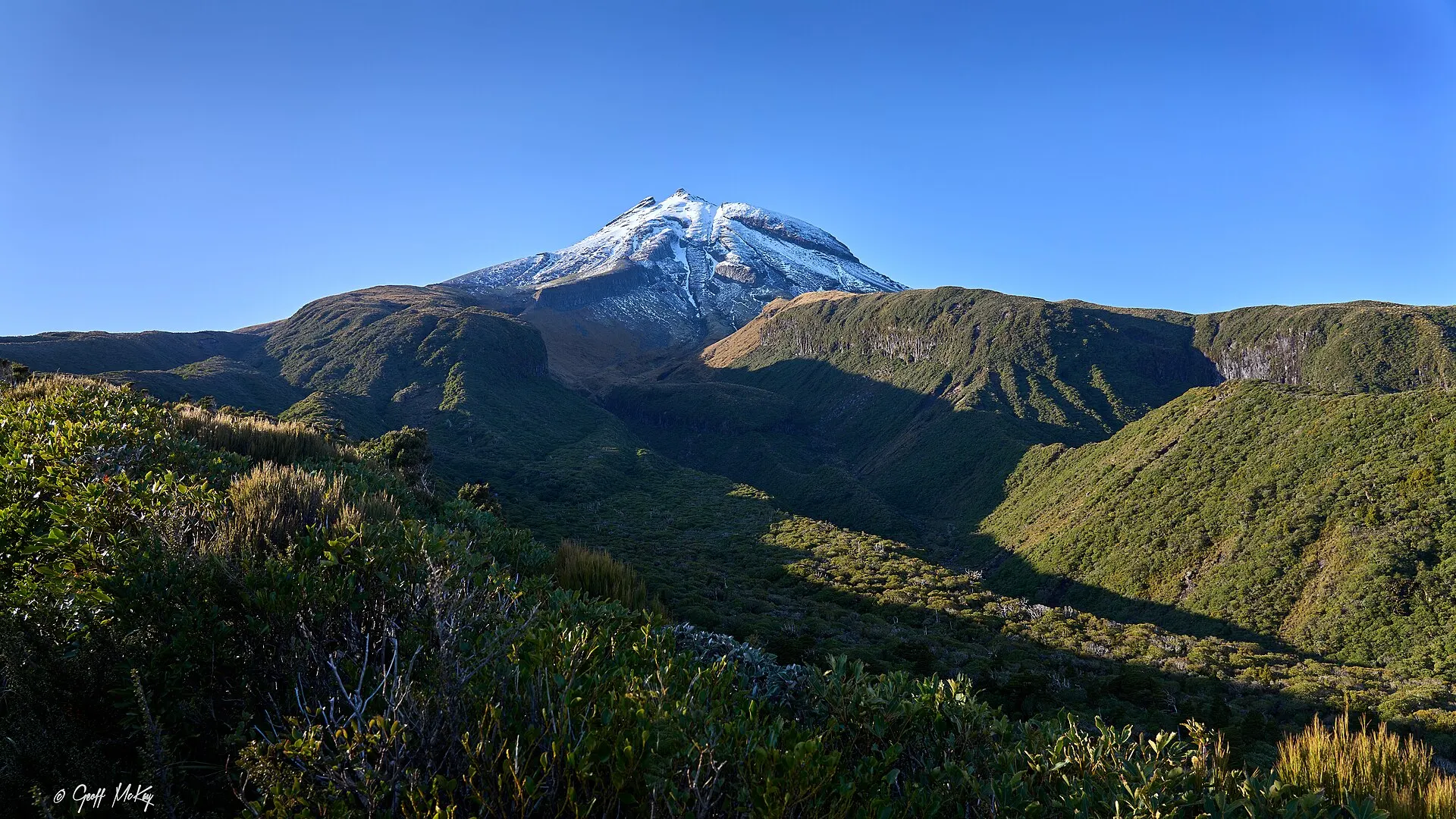
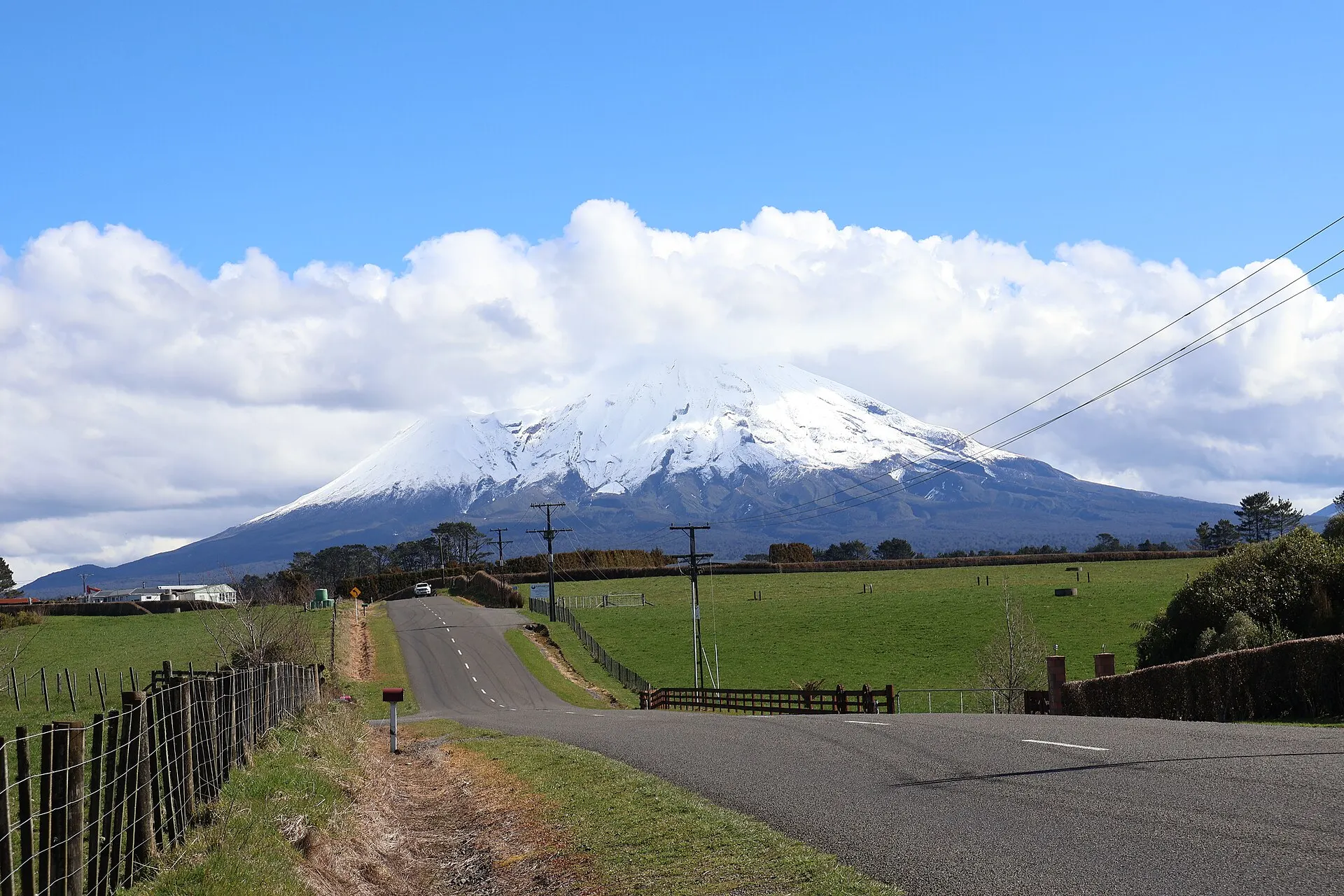
New Zealand sits on the boundary of the Pacific and Australian tectonic plates, which explains almost everything about its scenery. In the North Island, the Pacific Plate dives beneath the Australian Plate, feeding the volcanoes of the Taupō Volcanic Zone – Ruapehu, Ngāuruhoe and Tongariro, the huge caldera now filled by Lake Taupō, and the geysers and boiling mud of Rotorua. In the South Island, the plates slide past and push against each other along the Alpine Fault, lifting the Southern Alps at a geologically rapid rate; Aoraki/Mount Cook (3,724 m) is the highest peak.
Ice-age glaciers then carved the fiords of Fiordland (Milford Sound/Piopiotahi, Doubtful Sound/Patea), the deep lakes of the Southern Lakes and the glacier valleys of the West Coast, where the Franz Josef and Fox glaciers still descend into rainforest. The result is an unusually compact variety of landscapes: you can drive from subtropical beaches to active volcanoes in a day in the north, or from glaciers to vineyards in the south.
| Quick facts | |
|---|---|
| Area | ≈ 268,000 km² (North Island ≈ 114,000 km², South Island ≈ 150,000 km²) |
| Highest mountain | Aoraki/Mount Cook, 3,724 m |
| Largest lake | Lake Taupō, ≈ 616 km² |
| Longest river | Waikato River, ≈ 425 km |
| Coastline | ≈ 15,000 km |
| Capital | Wellington (Te Whanganui-a-Tara) |
| Largest city | Auckland (Tāmaki Makaurau), ≈ 1.8 million people |
| Population | ≈ 5.3 million (Stats NZ, 2025) |
| Currency | New Zealand dollar (NZ$) |
| Time zone | UTC+12 (UTC+13 daylight saving, late Sep – early Apr) |
| Government | Parliamentary democracy and constitutional monarchy; King Charles III is head of state |
People: a Pacific nation
New Zealanders call themselves Kiwis, after the national bird. About 70% of people identify with European ethnicities (Pākehā), around 17–18% as Māori, about 17% as Asian and around 9% as Pacific peoples (people can identify with more than one group, so the totals exceed 100%). Auckland is the largest Polynesian city in the world, with large Samoan, Tongan, Cook Islands, Niuean and Fijian communities.
The culture is informal, egalitarian and outdoorsy: people say hello to strangers on walking tracks, many families own a bach (holiday house, 'crib' in the south), and weekends revolve around sport, beaches and barbecues. Rugby is close to a religion – the All Blacks and their haka are a national symbol – but netball, cricket, sailing and football also have huge followings.
Some Kiwi words you will hear: jandals (flip-flops), chilly bin (cool box), dairy (corner shop), tramping (hiking), togs (swimsuit), sweet as (great), chur (thanks).
Māori culture: te ao Māori
Māori are the tangata whenua – the people of the land. Māori culture is woven through New Zealand life: in place names, in the haka performed by sports teams, in the opening of official events with karakia (prayers) and pōwhiri (welcomes), and in values such as manaakitanga (hospitality, care for guests), kaitiakitanga (guardianship of the environment) and whanaungatanga (relationships, kinship).
Society is organised by whakapapa (genealogy) into iwi (tribes), hapū (sub-tribes) and whānau (extended families). Each has its marae, a communal meeting ground with a carved meeting house (wharenui) that represents an ancestor: the ridge pole is the backbone, the rafters the ribs. Visitors are welcomed onto a marae with a formal pōwhiri: a challenge (wero), a call (karanga), speeches (whaikōrero), songs and the hongi.
The best places to experience Māori culture as a visitor:
- Rotorua, heartland of the Te Arawa people: cultural evenings with hāngī (earth-oven feast) and kapa haka at Te Puia, Mitai, Te Pā Tū and the Whakarewarewa living village – see Rotorua.
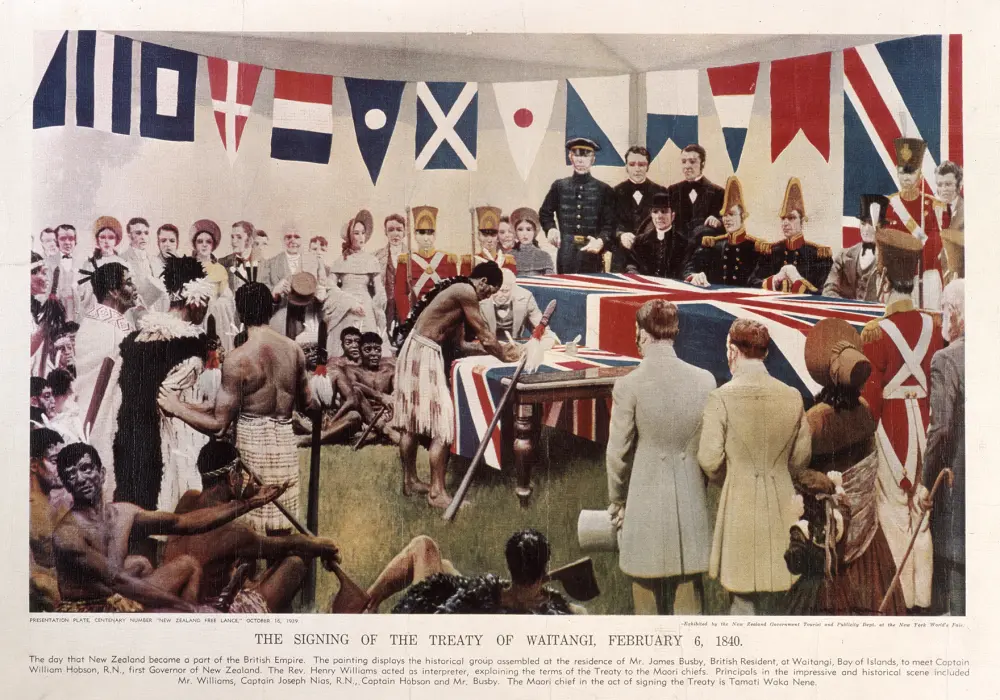
- Waitangi Treaty Grounds, Bay of Islands: guided tours, cultural performances and the great war canoe – see Bay of Islands.
- Te Papa in Wellington and Auckland Museum: superb taonga (treasures), carved houses and waka.
- Te Matatini kapa haka festival (February 2027) and Matariki events in winter – see events.
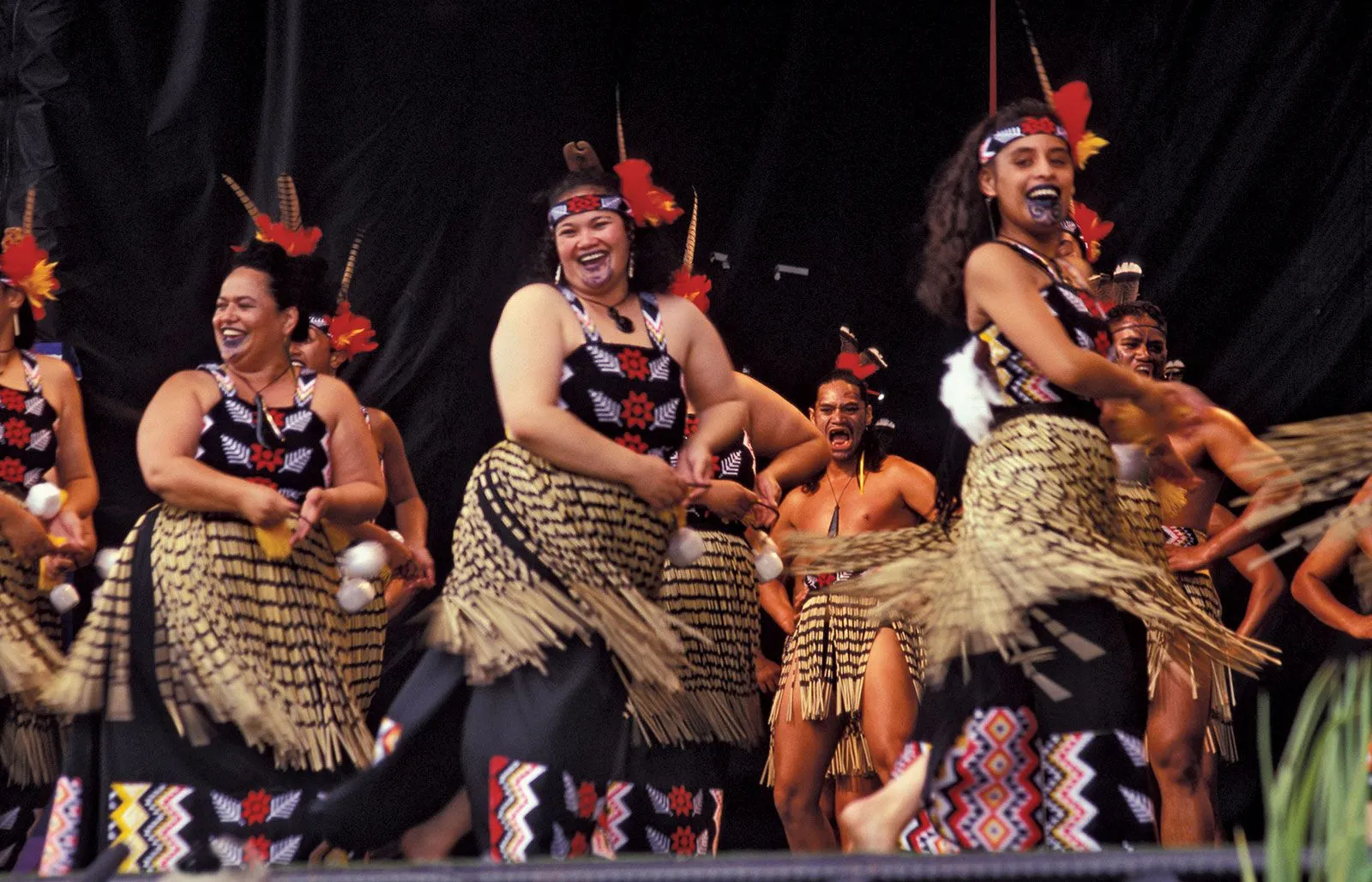
Kapa haka – group performance of song, dance and haka – is the heart of many Māori celebrations.
Te reo Māori: a few words to learn
Te reo Māori became an official language in 1987 and is enjoying a strong revival; many place names are Māori, and a growing number of Kiwis use it every day. Pronunciation is phonetic: vowels as in Italian (a = 'ah', e = 'eh', i = 'ee', o = 'aw', u = 'oo'), a macron (ā) lengthens the vowel, 'wh' is usually said like 'f', and 'ng' as in 'singer'.
| Word | Meaning |
|---|---|
| Kia ora | Hello; thank you; good health |
| Tēnā koe / tēnā koutou | Formal greeting to one person / to many |
| Haere mai / nau mai | Welcome |
| Ka kite anō | See you again |
| Whānau | Extended family |
| Kai | Food |
| Whare | House |
| Moana / roto / maunga | Sea / lake / mountain |
| Pounamu | Greenstone (nephrite jade) |
| Tapu / noa | Sacred, restricted / ordinary, free from restriction |
| Aroha | Love, compassion |
Unique wildlife
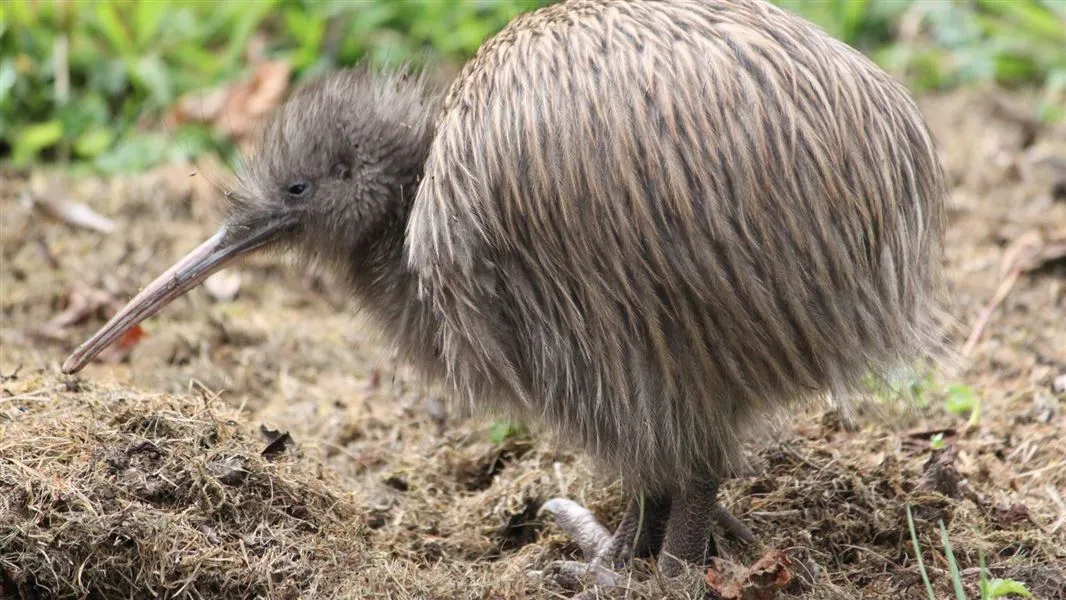
Isolated for some 80 million years, New Zealand evolved without land mammals (apart from bats), so birds took their place – many of them flightless. The kiwi (five species), the alpine parrot kea, the flightless takahē and night parrot kākāpō, the tūī and the reptile tuatara (the last survivor of an order that lived with the dinosaurs) are found nowhere else. Since human arrival, rats, stoats and possums have devastated native birds; the national Predator Free 2050 goal aims to eliminate them.
Where to see them: predator-fenced sanctuaries like Zealandia in Wellington and Tiritiri Matangi island near Auckland; kiwi houses in Rotorua and Ōtorohanga; wild kiwi on Stewart Island/Rakiura. Marine life is easier still: sperm whales and dusky dolphins at Kaikōura, Hector's dolphins at Akaroa, gannets at Cape Kidnappers, penguins and albatross on the Otago Peninsula and fur seals almost everywhere on the coast.
Why visit New Zealand?
- Scenery at every turn – fiords, glaciers, volcanoes, beaches and lakes in a country the size of the UK. Ten of our favourites are in New Zealand's top attractions.
- Easy and safe – English-speaking, well organised, with excellent visitor information (i-SITEs) and a culture of hospitality.
- Adventure – the birthplace of commercial bungy jumping and jet-boating, with world-class hiking, skiing and kayaking. See activities.
- Māori culture – living, welcoming and increasingly accessible to visitors.
- Food and wine – Sauvignon Blanc from Marlborough, Pinot Noir from Central Otago, lamb, seafood and a serious café culture. See food and wine.
- Middle-earth – visit the Hobbiton Movie Set and the landscapes of the films.
Ready to start planning? See our destinations, itineraries and visa guide.
Frequently asked questions
What does Aotearoa mean?
It is usually translated as 'land of the long white cloud'. Aotearoa is the most widely used Māori name for New Zealand.
Is Aotearoa the official name of New Zealand?
New Zealand is the formal name, but 'Aotearoa' and 'Aotearoa New Zealand' are widely used by government, media and on official documents, and te reo Māori is an official language.
What are the Māori names of the North and South Islands?
Te Ika-a-Māui (the North Island) and Te Waipounamu (the South Island). Both names became official alternatives in 2013.
What is the population of New Zealand?
About 5.3 million people (Stats NZ estimate, 2025). Auckland has about 1.8 million.
What is New Zealand famous for?
Dramatic landscapes (Milford Sound, the Southern Alps, volcanoes), Māori culture, adventure sports, the All Blacks, wine, kiwi birds and the Lord of the Rings film locations.
Sources and official information
Facts were checked against these official sources in November 2026. Opening hours, prices and timetables change, so confirm before you go.
- teara.govt.nz
- teara.govt.nz
- stats.govt.nz
- linz.govt.nz
- tetaurawhiri.govt.nz
- doc.govt.nz
- newzealand.com
- gns.cri.nz
NewZealandTravel.com is an independent guide, not the official site of Tourism New Zealand, the New Zealand Government or any operator. Some links are affiliate links: tours go to GetYourGuide and hotels go to Booking.com, and we may earn a commission at no extra cost to you.